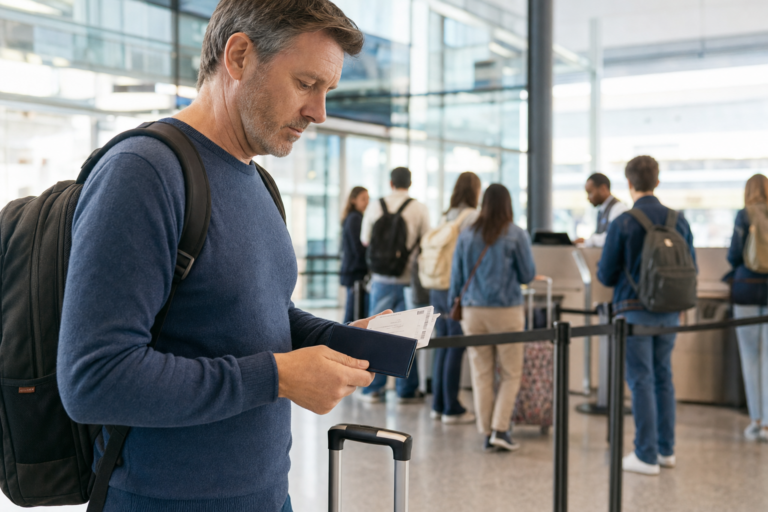
Yes. You can usually bring a power bank on a plane in 2026, but it must stay in the aircraft cabin and not in checked baggage. In the United States, power banks rated at up to 100 watt-hours are generally permitted without airline approval. Models over 100 Wh and up to 160 Wh need the airline’s approval, while units over 160 Wh are not permitted as ordinary passenger baggage. Airlines may impose stricter rules on capacity, quantity, storage and onboard use.
There are also international changes to consider. The International Civil Aviation Organization introduced technical-instruction changes effective March 27, 2026 that limit passengers to two power banks and prohibit recharging a power bank during a flight. Airlines and national authorities implement these requirements through their own policies, so always follow the rules of the operating carrier and crew instructions.
Where to pack a power bank
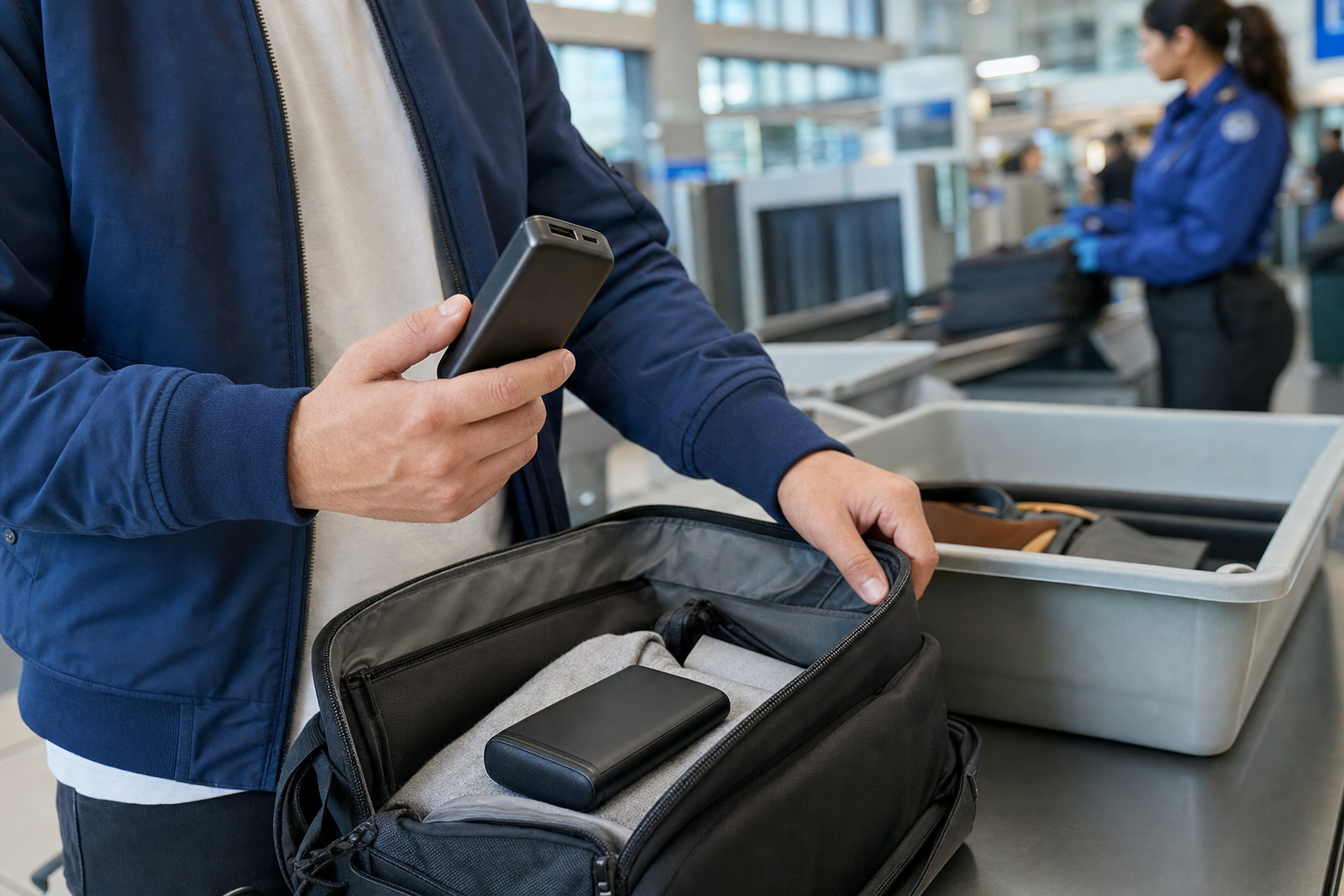
Pack every power bank in your carry-on bag or personal item. The Federal Aviation Administration treats portable chargers and power banks as spare lithium-ion batteries, which are not allowed in checked baggage.
If your carry-on bag must be checked at the gate or planeside, remove the power bank before handing over the bag. Keep it with you in the cabin. The same applies to spare batteries and battery-powered devices such as phones, laptops and electronic cigarettes.
Smart luggage needs particular attention. A bag with a removable lithium battery can generally be checked after the battery has been removed and carried into the cabin under the applicable battery rules. Check the airline’s smart-bag policy before travelling, as requirements can vary.
Protect the power bank against damage, accidental activation and short circuits. Practical precautions include:
- Keeping it in its original retail packaging, a battery case or a protective pouch.
- Covering exposed terminals with nonconductive tape when necessary.
- Keeping it away from loose coins, keys and other metal objects.
- Making sure its power button cannot be pressed accidentally.
- Placing it where you can reach it quickly if the bag is gate-checked.
Do not fly with a power bank that is swollen, cracked, leaking, unusually hot or otherwise damaged. The Federal Aviation Administration also says that damaged or recalled batteries likely to create sparks or dangerous heat cannot be carried unless the battery has been removed or otherwise made safe. Check the manufacturer’s recall notices and the U.S. Consumer Product Safety Commission if you are unsure about a model.
Carry-on only does not always mean an overhead bin is acceptable. The Federal Aviation Administration requires power banks to remain in the cabin, but it does not impose a universal under-seat storage rule. Individual airlines may be stricter. For example, Southwest requires power banks to be stored in a personal item under the seat rather than in an overhead bin. Keeping a battery accessible also helps passengers and crew respond promptly if it overheats.
How to check a power bank’s permitted capacity
Airline battery limits are based on watt-hours, written as Wh, rather than milliamp-hours, written as mAh, alone. Look for the Wh rating on the power bank’s label, packaging or manufacturer documentation.
| Power bank rating | General U.S. passenger-baggage position |
|---|---|
| Up to 100 Wh | Normally allowed in carry-on baggage without airline approval |
| Over 100 Wh to 160 Wh | Allowed only with airline approval; no more than two larger spare lithium-ion batteries per passenger |
| Over 160 Wh | Not allowed as ordinary carry-on or checked passenger baggage |
For larger batteries, airline approval is required before travel. Approval is not automatic, and an airline can set a lower capacity limit or decline to carry the battery. Southwest, for example, permits only one power bank per customer and limits it to 100 Wh.
If the label provides only mAh and voltage, calculate watt-hours as follows:
Watt-hours = milliamp-hours ÷ 1,000 × nominal voltage
For example, a 20,000 mAh power bank with a nominal internal battery voltage of 3.7 volts is:
20,000 ÷ 1,000 × 3.7 = 74 Wh
A 27,000 mAh model at 3.7 volts equals 99.9 Wh, which is just below the usual 100 Wh threshold. Use the battery’s nominal internal voltage, often 3.6 or 3.7 volts, rather than the five-volt output printed beside a USB port. If the manufacturer has printed a Wh rating on the unit, use that marked rating.
An unreadable or missing capacity label can create problems at check-in or boarding because airline staff may be unable to verify the battery’s size. A power bank with a permanent, legible Wh marking is the safest choice. Do not rely only on an online product listing or a retailer’s description.
How many power banks you can take
Under Federal Aviation Administration guidance, there is no general numerical limit for most personal-use lithium batteries of up to 100 Wh. They must be for your own use, not for sale or distribution. However, the Federal Aviation Administration notes that airlines may apply stricter quantity and watt-hour limits.
For international travel, the International Civil Aviation Organization’s March 27, 2026 changes limit passengers to two power banks for personal use. This is separate from the U.S. rule allowing up to two larger spare lithium-ion batteries over 100 Wh and up to 160 Wh with airline approval. In practice, you must meet both the applicable government requirements and the operating airline’s policy.
The practical approach is to bring no more than two power banks on an international itinerary unless the airline sets a lower limit. Check the carrier actually operating each flight, not only the company that sold the ticket or whose flight number appears on your booking. Codeshare journeys can involve different airlines and different battery policies.
Southwest has a stricter rule effective April 20, 2026: each customer may bring one power bank, which must not exceed 100 Wh. Passing airport security does not override an airline’s dangerous-goods policy, so a battery accepted at the screening checkpoint can still be refused by the carrier.
Using and charging a power bank during a flight
Carrying a power bank, using it to charge another device and recharging the power bank are separate issues:
- Carrying it: Generally permitted in the cabin when the battery’s capacity, quantity and condition meet the applicable rules.
- Using it to charge a phone or other device: The International Civil Aviation Organization recommends against this, and airlines may prohibit it or impose conditions. Follow the operating carrier’s policy and crew directions.
- Recharging the power bank: Prohibited under the International Civil Aviation Organization’s 2026 changes. Do not connect it to an in-seat outlet or USB port during the flight.
Southwest specifically prohibits charging a power bank from in-seat power. It also requires a power bank being used to remain visible, rather than operating inside a bag. Other airlines may have different restrictions, including rules on storage location or use during particular phases of flight.
Never use a damaged charger, cover it with bedding or place it where it could be crushed or trapped. Stop using it and tell a crew member immediately if it becomes unusually hot, expands, emits an odour, smokes or catches fire. If a phone, battery or power bank falls into a powered or adjustable seat mechanism, do not try to retrieve it yourself; notify the cabin crew.
Preflight power bank checklist
- Confirm that the Wh rating is clearly printed on the power bank.
- Obtain airline approval before travel for a unit over 100 Wh and up to 160 Wh.
- Check every operating airline’s rules on capacity, quantity, storage and onboard use.
- For international travel, plan on a maximum of two power banks unless the airline permits fewer.
- Pack the charger in a carry-on or personal item, never in checked baggage.
- Remove it before a carry-on bag is gate-checked or checked planeside.
- Protect it from short circuits, accidental activation and physical damage.
- Leave behind any swollen, damaged or dangerously recalled unit.
- Keep it out of an overhead bin when the airline requires under-seat storage.
- Do not recharge the power bank during the flight.
If an airline’s instructions differ from the general limits, the airline’s policy and crew directions control for that flight. Check the operating carrier shortly before departure, especially for an international or codeshare itinerary.
Sources
- Federal Aviation Administration PackSafe lithium batteries guidance
- Federal Aviation Administration carry-on baggage tips
- International Civil Aviation Organization power bank restrictions
- International Air Transport Association guidance on 2026 power bank changes
- Southwest Airlines power bank and lithium battery policy