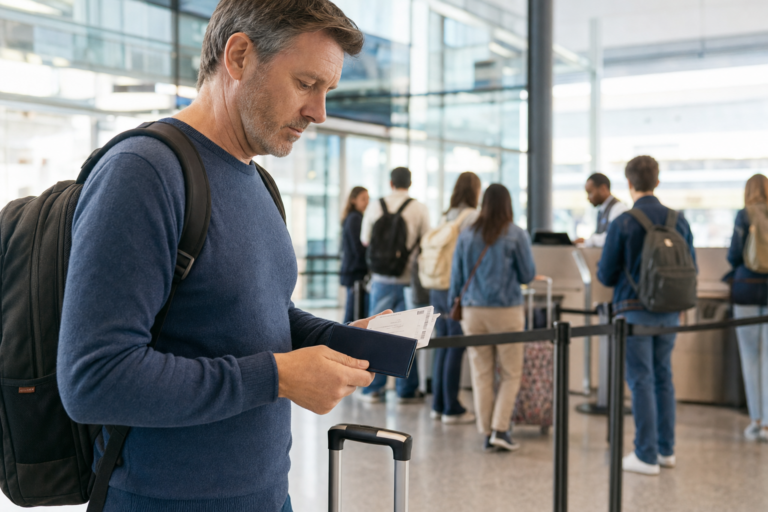
Usually, no. Since the European Union Entry/Exit System, known as EES, became fully operational on April 10, 2026, eligible non-European Union travelers on short visits should not expect routine entry or exit stamps at the external borders of the 29 countries using the system. EES replaces those stamps with a digital record. However, stamps have not disappeared in every situation: they can still be used during a narrowly defined technical fallback procedure, and Cyprus and Ireland do not use EES and continue to stamp passports manually.
For example, a U.S. citizen visiting France, Italy or Spain for tourism normally has their crossings recorded in EES rather than stamped in their passport. The system applies to most non-EU nationals making a short stay of up to 90 days in any 180-day period, whether they are visa-free travelers or hold a short-stay visa. Some categories of traveler are exempt from EES registration and follow different border procedures.
What happens during routine EES processing
Your official record of entry and exit is now digital. EES records information from your travel document, the date and place of each entry and exit, and any refusal of entry. It also uses biometric information, including a facial image and, where required, fingerprints. If you hold a short-stay visa, fingerprints already held in the Visa Information System are not stored again in EES.
Your first EES border crossing may take longer because your file and biometric information may need to be created. On later crossings, border authorities can use the existing record to verify your identity and log the new entry or exit. Depending on the border crossing point, you may use a kiosk, a self-service system or an automated gate before speaking with, or being directed by, a border officer.
A passport returned without an ink stamp has not been overlooked. For a traveler covered by EES, the electronic entry or exit record replaces the function previously served by the stamp.
EES applies only when you cross an external border of the countries using the system. You do not normally make a new EES entry or exit when moving between Schengen countries. A traveler flying from New York to Paris and then continuing to Rome, for instance, normally enters the Schengen Area in France. The EES exit is recorded when the traveler later leaves the area through an external border, not on the France-to-Italy flight.
Can you request an official passport stamp?
You may ask courteously, but do not rely on receiving a stamp for collecting or personal-interest purposes. The published EES rules describe routine passport stamping as replaced by electronic records, while the remaining official stamps are connected to specific border procedures. There is no published EES process for requesting a souvenir immigration stamp.
Do not hold up the queue or dispute an officer’s response. Border authorities must apply the procedure appropriate to the traveler’s documents, legal status and the conditions at that crossing point. Another traveler receiving a stamp does not establish a general practice or entitlement.
It is also important to distinguish between two very different kinds of stamp:
- An official immigration stamp is placed by a border authority as part of a legally recognised border procedure.
- A souvenir stamp may be available from a tourist attraction, historic site or visitor centre. It is not proof of immigration status, border crossing or compliance with the Schengen short-stay limit.
Do not put decorative or novelty stamps in a U.S. passport. The U.S. Department of State warns that unofficial stamps and markings are not allowed and may cause travel problems. Use a travel journal, postcard or separate souvenir booklet instead.
When official stamps may still be used
The EES Regulation retains passport stamping as an exceptional technical fallback. A malfunctioning kiosk alone does not necessarily lead to a stamp, because border authorities may still be able to record the crossing through the national interface or temporary electronic storage.
An entry or exit stamp is required only if it is technically impossible to enter the data in the EES central system or the common identity repository, impossible to use the national interface, and impossible to store the data locally in electronic form. In that situation, the authority manually records the required non-biometric information and stamps the travel document. The information must then be entered into EES as soon as technically possible.
A stamp issued during such an outage is an operational border record, not a collectible. Keep the page unobstructed and retain independent evidence of the journey, such as a boarding pass or ferry confirmation, until you are satisfied that the travel record is accurate.
Cyprus and Ireland are outside EES. Their external-border procedures remain separate, and their passports continue to be stamped manually. This is an important exception to any broad statement that European passport stamps have ended.
Who may be outside the normal EES process
Not every non-EU traveler is registered in EES. The full list is detailed and depends on the documents you hold, but major exempt categories include:
- citizens of EU countries, Iceland, Liechtenstein, Norway and Switzerland, as well as citizens of Cyprus and Ireland;
- holders of a qualifying residence permit or long-stay visa issued by a country using EES;
- some non-EU family members of EU, Icelandic, Liechtenstein, Norwegian or Swiss citizens who hold the required residence card or residence permit;
- nationals of Andorra, Monaco and San Marino, and people holding passports issued by Vatican City State or the Holy See;
- certain people covered by special border rules, including holders of valid local border traffic permits and specified international rail crew members.
There are important qualifications. In particular, a residence permit or long-stay visa issued by Cyprus or Ireland does not exempt its holder from EES when entering a country that uses EES. Likewise, a non-EU family member who does not hold the required residence card or permit can be registered in EES.
Being exempt from EES registration does not automatically guarantee a stamp. Present the residence card, residence permit, long-stay visa or other document that establishes your status, and follow the instructions for the appropriate lane and border procedure.
How to keep proof of your entry and exit
Older passport stamps remain part of your travel history. They do not become invalid merely because EES is now in operation. But a missing physical exit stamp is no longer a reliable sign that an exit was missed: for an EES-covered traveler, the relevant record is normally electronic.
Keep records that identify the date, route and place where you crossed the external border. Useful evidence includes:
- airline, ferry or international rail confirmations showing the route and date;
- boarding passes, saved as files or screenshots where necessary;
- hotel invoices or accommodation confirmations near the beginning and end of the trip;
- rental-car, toll, fuel or local-transport receipts where relevant;
- copies of passport pages that contain older stamps or a fallback stamp; and
- documents explaining a canceled journey, medical emergency or delayed departure.
A credit-card statement, photograph or phone location history can support an explanation, but transport records showing the actual international journey are generally stronger evidence of a border crossing.
Travelers covered by EES can request access to their data and seek correction or completion of inaccurate or incomplete information. They can also request erasure of unlawfully processed data. If you believe a departure is missing, follow the steps in What to Do If Your EES Exit Was Not Recorded. For trip planning, use How to Check How Many Schengen Days You Have Left With EES rather than relying on old passport stamps.
The practical rule is to treat an EES digital record, not an ink stamp, as the normal proof of a short visit to the participating countries. Keep independent travel evidence and address a suspected record error promptly, rather than waiting for your next border crossing.