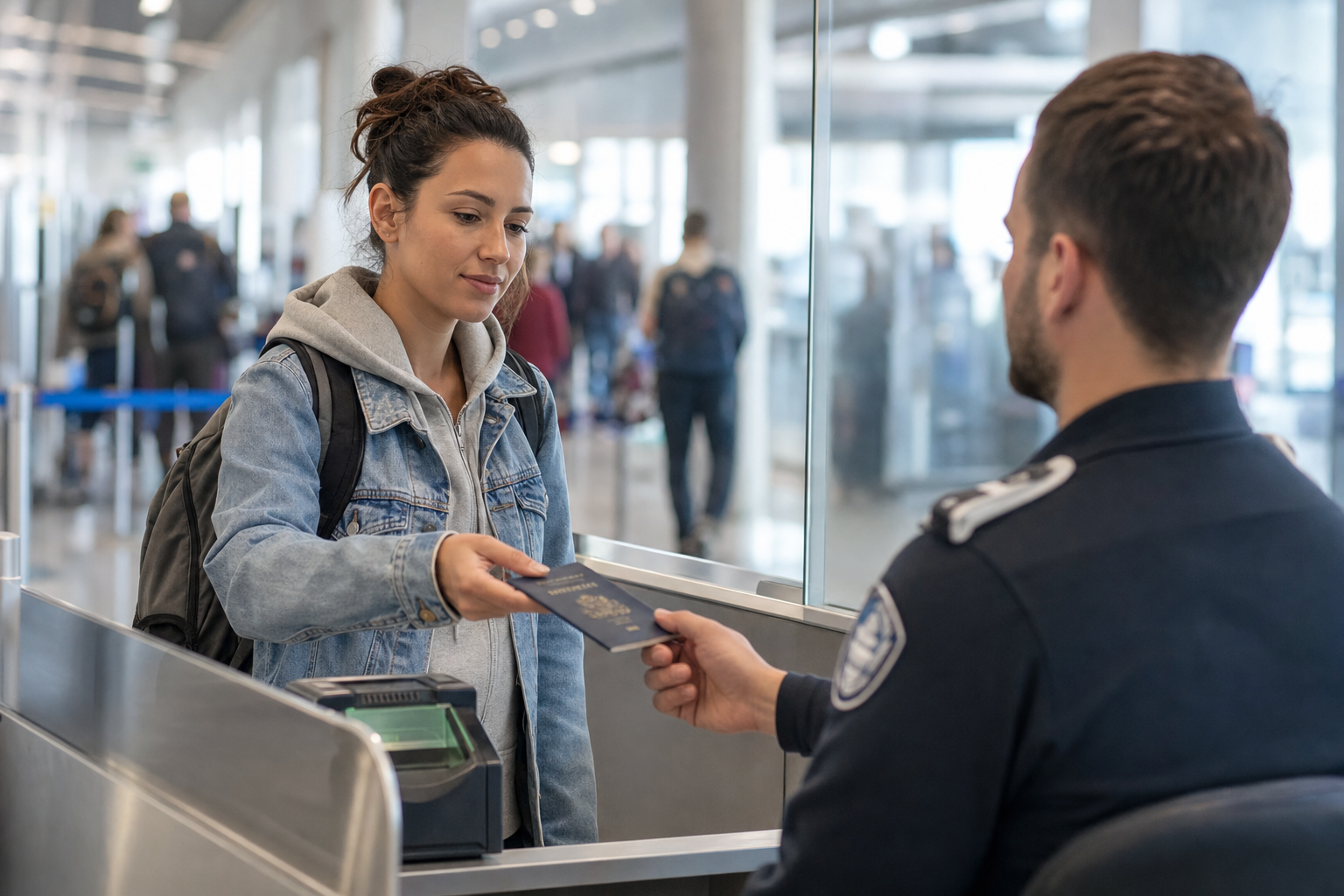
No. U.S. citizens do not need to complete a mandatory Entry/Exit System registration before leaving the United States. The Entry/Exit System, usually called EES, is not a visa, travel authorization or paid pre-travel application. For most Americans visiting the Schengen area without a visa for a short stay, registration happens when they cross an external border. There is no EES approval number to obtain before boarding.
EES has been fully operational at all external border crossing points in the 29 Schengen countries since April 10, 2026. It generally applies to non-European Union nationals, including Americans, travelling for a short stay of up to 90 days in any 180-day period. Some people are exempt because of their residence status, visa or family status.
What to do before leaving the United States
If you are asking whether Americans need to register for EES online, the practical answer is no. Bring the passport you will use for the trip and prepare to complete border formalities on arrival. EES does not charge a registration fee.
EES is separate from the European Travel Information and Authorisation System, known as ETIAS. EES records eligible travellers’ entries and exits at the external border. ETIAS will be a separate online travel authorization for visa-exempt visitors, including U.S. citizens, once it begins operating.
As of September 11, 2026, ETIAS is not operating and is not accepting applications. The European Union says it is scheduled to begin in the last quarter of 2026, but has not yet announced a specific start date. Check the official status before any trip later in 2026. Our separate guide explains whether Americans need ETIAS for Europe in 2026.
First entry checklist
- Carry the U.S. passport you will use throughout the trip.
- Check the entry and passport-validity rules for every country on your itinerary. Requirements can differ by destination and travel document.
- Identify the first Schengen country where you will pass passport control, including on a connecting itinerary.
- Allow extra time for the first border crossing, particularly at a busy airport, seaport or land border.
- Keep accommodation details, an onward or return ticket and basic trip information accessible in case a border officer asks for them.
- Bring a valid residence permit, long-stay visa or qualifying family residence document if you believe an EES exemption applies to you.
EES registration does not guarantee admission. Border authorities can still check that you meet the normal conditions for entry, including the purpose and expected length of your stay.
What happens at the first external Schengen border
Your initial EES registration takes place where you actually enter the Schengen area through an external border. Depending on the crossing point, you may complete part of the process at a staffed passport-control desk or a self-service system. A border guard remains responsible for the decision to admit you.
- Your travel document is checked. EES records information from your passport, including biographical details and nationality.
- A facial image is captured. You may be asked to look at a camera at a kiosk or border-control desk. This is separate from the photograph printed in your passport.
- Fingerprints are collected when required. Visa-exempt travellers, including most American visitors, normally have four fingerprints recorded. Children under age 12 do not have fingerprints collected, even if EES applies to them.
- Your border crossing is recorded digitally. The system records the date and place of entry or exit and helps authorities track the permitted duration of a short stay.
- The officer completes the entry check. You may be asked where you are staying, how long you plan to remain or when you intend to leave.
| Traveller | Information recorded when EES applies | Fingerprint rule |
|---|---|---|
| Visa-exempt U.S. visitor age 12 or older | Passport information, facial image, entry and exit details | Four fingerprints are normally recorded |
| Child under age 12 | Passport information, facial image, entry and exit details | No fingerprints are collected |
| Short-stay visa holder | Passport information, facial image, entry and exit details | Fingerprints already held in the Visa Information System are not stored again in EES |
Children under age 12 are not generally exempt from EES simply because of their age. Their travel-document details, facial image and crossings can still be recorded when the system applies to them.
Since April 10, 2026, EES has replaced routine passport stamping for travellers registered in the system. The electronic EES record, rather than a passport stamp, is the main record of an entry or exit.
Where registration happens on connecting trips
On a trip that continues to another Schengen country, registration normally occurs at the first Schengen airport or border where you clear passport control. Your onward flight is usually an internal Schengen journey and does not involve another external-border entry check.
- New York to Paris to Rome: EES registration normally takes place in Paris.
- Chicago to Zurich to Vienna: Registration normally takes place in Zurich. Switzerland is not an EU member state, but it is part of the Schengen area.
- Boston to London to Madrid: Registration normally takes place in Madrid because the United Kingdom is outside the Schengen area.
- Washington to Dublin to Amsterdam: Registration normally takes place in Amsterdam because Ireland is outside the Schengen area and does not use EES.
If you stay in an airport’s international transit area while connecting to a flight outside the Schengen area and do not pass through passport control, you generally have not entered the area and are not registered there. However, collecting checked baggage, changing airports or taking a flight within the Schengen area can require you to clear the external border.
Travel between Schengen countries does not normally create another EES entry or exit. Temporary internal border checks can still occur, so keep your passport available. If you leave the Schengen area and later return, you cross an external border again and EES records the new crossing.
On departure for the United States, the exit is normally recorded at the last Schengen airport or land border. For example, on a Rome to Frankfurt to United States itinerary, passport control and the EES exit record are normally handled in Frankfurt.
Exemptions and the optional Travel to Europe app
American citizenship by itself does not exempt someone from EES. However, a U.S. citizen who holds a long-stay visa or residence permit issued by a country using EES is generally not registered in the system and should present that document with the passport. Holders of residence permits or long-stay visas issued by Ireland or Cyprus are registered in EES.
A non-EU national who is a qualifying family member of an EU, Icelandic, Liechtenstein, Norwegian or Swiss citizen can also be exempt if they hold the appropriate residence card or residence permit. The exemption can apply whether or not the family member is travelling with them. A family relationship alone is not enough: a traveller without the required residence document may still be registered.
Dual nationals should travel using their passport from an EU country, Iceland, Liechtenstein, Norway or Switzerland if applicable. They are not registered as U.S. visitors under EES when they establish that status with the relevant travel document. Travellers with unusual residence or family circumstances should check the official exemption guidance before travelling.
The Travel to Europe app is optional
The official Travel to Europe mobile app lets eligible travellers pre-register limited information before reaching a supported border crossing. It is optional, does not authorize travel and does not replace passport control. It also does not collect the fingerprints required for visa-exempt travellers at the border.
The app is for non-EU travellers subject to EES who hold a biometric passport. A journey can be submitted no earlier than 72 hours before travel. As of September 11, 2026, Sweden supports passport data, a facial image and an entry questionnaire through the app, while Portugal supports the entry questionnaire. Availability and functions can change, so check the official app guidance shortly before departure.
Avoid fake EES registration services
- Do not pay a company that claims it can obtain EES approval or guarantee entry.
- Do not provide payment details for a supposedly mandatory online EES application. There is no such application.
- Use official European Union guidance to find the Travel to Europe app rather than advertisements or unsolicited messages.
- Do not confuse EES with ETIAS. ETIAS is not yet operating as of September 11, 2026.
If no exemption applies, arrive with a valid passport, allow sufficient time at your first Schengen border and follow the instructions from the kiosk or border officer.