Do you have to take laptops out at TSA? Usually, yes. In a standard Transportation Security Administration (TSA) screening lane, remove laptops and other personal electronic devices larger than a mobile phone, along with your 3-1-1 liquids bag. At some checkpoints using computed tomography (CT) scanners, you may be told to leave electronics and travel-size liquids inside your carry-on. TSA PreCheck passengers also normally leave laptops and compliant liquids packed. Procedures can differ by lane, so follow the signs and the TSA officer’s instructions rather than unpacking automatically.
What to remove in a standard TSA screening lane
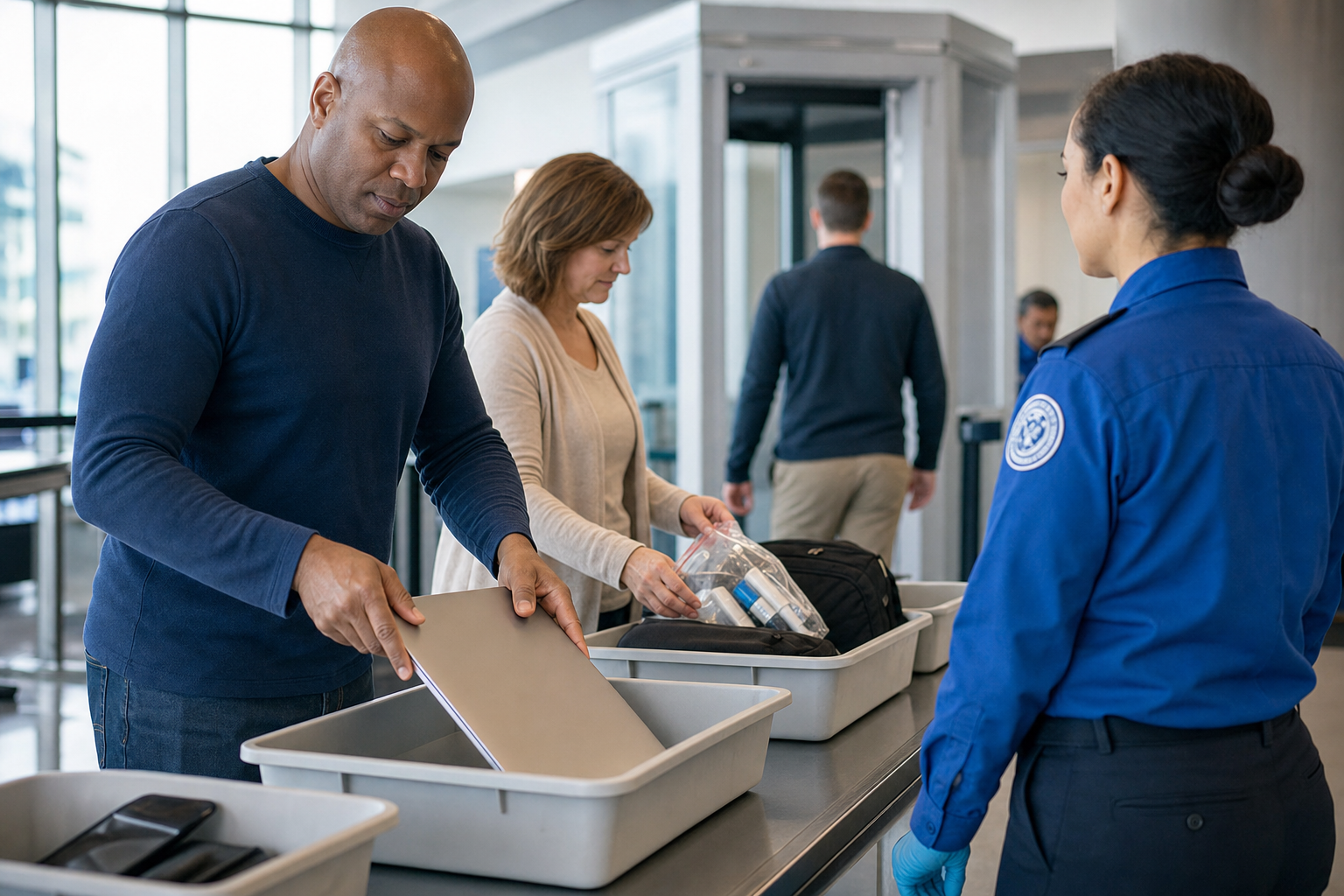
In a standard screening lane, TSA says to remove personal electronic devices larger than a cell phone from your carry-on bag. Place each device in a bin with nothing above or below it so the X-ray equipment can produce a clear image.
Devices that commonly need to come out include:
- Laptop computers and Chromebooks
- Tablets, including iPads
- Electronic readers
- Handheld game consoles, such as a Nintendo Switch or Steam Deck
- Other personal electronics larger than a phone
A mobile phone is not normally covered by the large-electronics rule, but it must be removed from your pocket before passenger screening. Putting it securely inside your carry-on is often preferable to leaving it loose in a bin.
In a standard lane, remove your 3-1-1 liquids bag and place it in a bin. The bag may contain liquids, aerosols, gels, creams and pastes in containers no larger than 3.4 fluid ounces, or 100 millilitres, each. Each passenger may bring one clear, quart-sized, plastic zip-top bag.
The size of the container matters, not the amount left inside it. A half-empty six-ounce bottle is not permitted in carry-on baggage simply because it contains less than 3.4 ounces. Put it in checked baggage, transfer the product to a compliant travel-size container or leave it at home.
Some liquids have different screening rules. Medically necessary liquids, medications and creams may be permitted in reasonable quantities exceeding 3.4 ounces, but you must declare them to a TSA officer for inspection. Formula, breast milk, toddler drinks and baby or toddler food in larger quantities are also permitted and do not need to fit in the quart-sized bag. Tell the officer about these items at the beginning of screening and keep them accessible for separate inspection.
Why CT scanner lanes may let items stay packed
Some checkpoints use computed tomography, commonly called CT, scanners for carry-on baggage. This equipment produces detailed three-dimensional X-ray images, allowing officers to examine a bag’s contents differently from a conventional X-ray system. When TSA operates a CT unit under the applicable procedure, travellers can leave electronics and travel-size liquids in their carry-on luggage.
This is why you may be told to keep your laptop packed on one trip but remove it on another. Procedures can also differ within the same airport, because one lane may use CT equipment while another uses a conventional X-ray system.
Do not try to identify the scanner and decide for yourself. Checkpoint signs and the officer managing your lane provide the instructions that apply at that moment. Equipment configuration, local procedures and additional screening needs can affect what must be removed. An officer may also ask you to separate an item or open a bag after the initial scan.
Leaving liquids packed does not change what you may bring through security. The 3-1-1 limit still applies to ordinary carry-on liquids unless an established exception applies. A CT scanner does not permit full-sized shampoo, drinks or other containers larger than 3.4 ounces through the checkpoint.
How TSA PreCheck changes the process
TSA PreCheck is an expedited screening programme for eligible travellers at participating United States airports. When your boarding pass shows the TSA PreCheck indicator and you use the designated lane, you normally do not need to remove your laptop or 3-1-1 liquids bag from your carry-on. Other electronics may also remain packed when the lane’s instructions allow it.
This benefit changes the screening process, not the packing rules. Ordinary toiletries must still meet the 3-1-1 limit, and prohibited items remain prohibited. Liquids larger than 3.4 ounces still need to qualify for an exception, go in checked baggage or be disposed of before screening.
TSA PreCheck does not prevent additional screening. Officers may inspect a bag or ask you to remove an item if an alarm occurs, the image is unclear or another security concern arises. Follow the new instruction even if it differs from the expedited process you usually experience.
Enrollment does not guarantee expedited screening on every trip. Check your boarding pass for the TSA PreCheck indicator and use the appropriate lane when available. If you are directed to standard screening, follow that lane’s instructions about electronics and liquids.
How to pack for either procedure
Pack as though you may need to remove your laptop and liquids bag, even if you expect to use TSA PreCheck or a CT-equipped lane. If you are told to leave everything inside, that becomes a convenience rather than a problem.
- Use an accessible laptop compartment. Place the computer in a sleeve or section that can be opened without unpacking clothing and other contents.
- Keep large electronics near the top. Store tablets, electronic readers and game consoles where they can be reached without emptying the bag.
- Put liquids in an outer pocket. Before leaving home, confirm that each ordinary liquid container is no larger than 3.4 ounces and that all of them fit in one clear, quart-sized zip-top bag.
- Organise cables and chargers. Keep cords in a small pouch so they do not wrap around electronics. Chargers do not normally have to be removed, but an uncluttered bag is easier to screen.
- Keep special liquids separate. Make medicines, formula, breast milk and other exempt items easy to reach, and declare them before screening begins.
- Wait for lane instructions. Do not take out a laptop when the officer is directing passengers to leave bags packed.
Battery restrictions are separate from the question of what must come out for screening. If you are travelling with a portable charger, review the rules for using a power bank on a plane before deciding where to pack it.
At the checkpoint, use this practical rule: in a standard lane, be ready to remove electronics larger than a phone and your 3-1-1 liquids bag. In a CT-equipped or TSA PreCheck lane, leave them packed when instructed. The officer’s directions for your specific lane always take priority over what happened on a previous trip.
Sources
- Transportation Security Administration Travel Checklist
- Transportation Security Administration Travel Tips and 3-1-1 Liquids Rule
- Transportation Security Administration What Can I Bring Complete List
- Transportation Security Administration CT Scanner and Innovation Checkpoint Fact Sheet
- Transportation Security Administration Checkpoint Requirements and Planning Guide