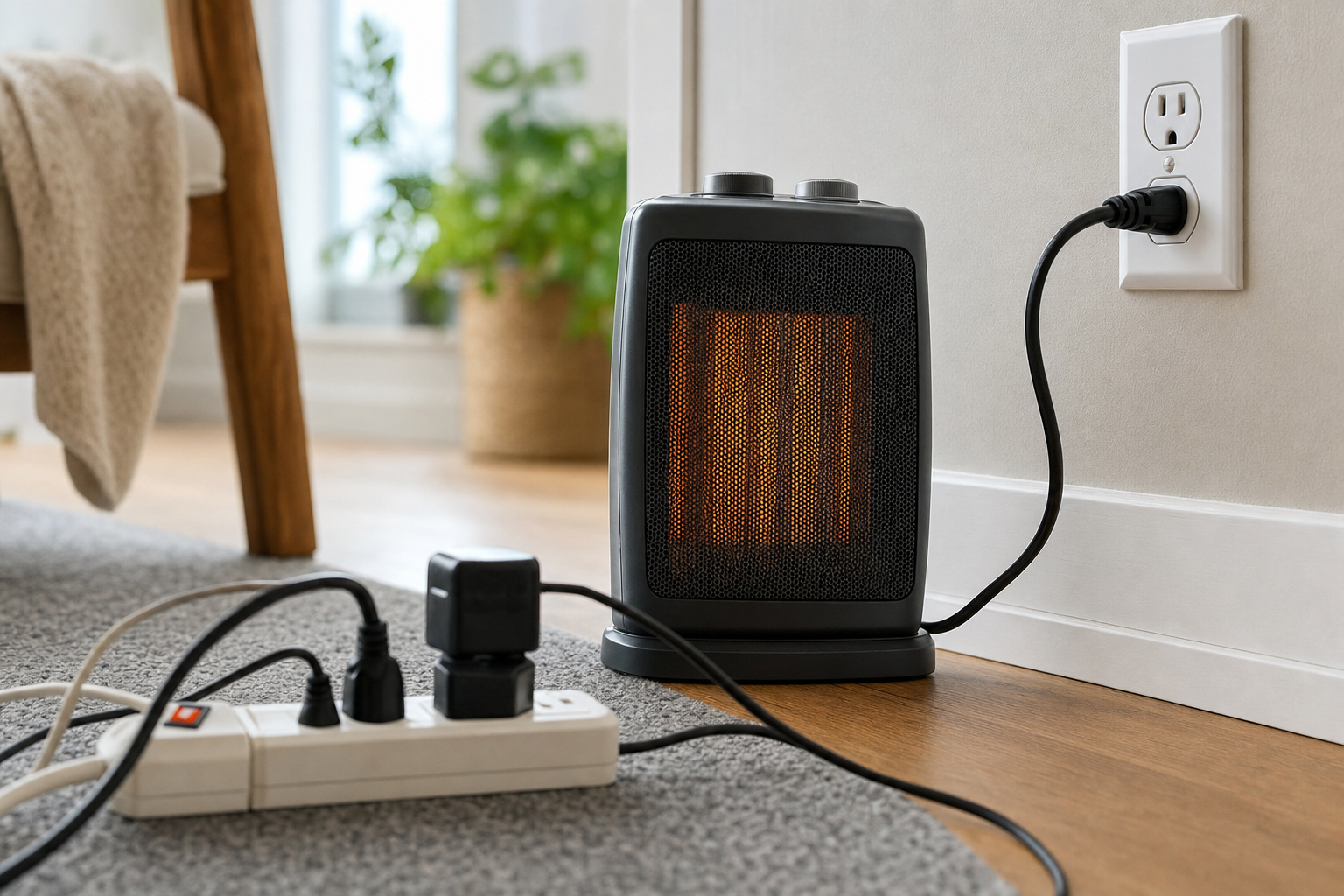
No. Plug a portable electric space heater directly into a secure wall outlet, never into a power strip or extension cord. A surge protector, heavy-duty strip or strip with an overload switch does not make the setup safe. Do not plug another appliance into the same electrical circuit while the heater is operating. If the factory cord cannot reach a suitable outlet, move the heater, choose another location or have a qualified electrician install an outlet.
Why power strips are unsafe for space heaters
Portable electric heaters place a substantial load on a home electrical system. A power strip introduces another cord, plug, set of internal connections and socket between the heater and the wall. Official guidance from the United States Consumer Product Safety Commission, United States Fire Administration and National Fire Protection Association says to connect portable electric heaters directly to wall outlets rather than power strips or extension cords.
Power strips and extension cords can overheat when used with a space heater. A strip’s circuit breaker, overload switch or surge-protection feature does not change the heater’s electrical demand. Surge protection is intended to protect certain equipment against voltage spikes; it is not a way to make a high-load heating appliance safer to operate through a strip.
The direct-wall rule also applies to devices that may not look like conventional power strips. Do not place a wall tap, plug-in timer, smart plug, outlet extender or adapter between the heater and the wall outlet unless the heater manufacturer expressly designed and supplied that device for the model. A certification mark or stated wattage rating on an accessory does not override the heater’s instructions or official fire-safety guidance.
The wall outlet itself must also be in good condition. The plug should enter fully and fit snugly without sagging or slipping. Do not use an outlet that is loose, cracked, damaged, discoloured or unusually warm. A direct connection cannot make a defective outlet safe.
Circuit loading matters as well. The United States Fire Administration advises not plugging anything else into the same circuit as a space heater because the circuit can overheat. A circuit may supply several outlets in one room or outlets in different rooms, so using a separate wall socket does not necessarily mean using a separate circuit. Unplug other appliances on the heater’s circuit while the heater is running. If you cannot identify the circuit or it repeatedly trips, stop using the heater there and consult a qualified electrician.
Small and low wattage heaters need the same caution
Labels such as “mini,” “desktop,” “personal” and “low wattage” do not create a general exception. A smaller heater may use less electricity than a full-size room heater, but you should still follow the connection instructions for that exact model and the general recommendation to use a wall outlet.
For example, a 2014 manual for the Honeywell HeatBud HCE100 Series lists a maximum output of 250 watts and instructs users to plug the heater directly into a wall outlet rather than an extension cord or relocatable power tap. This is a model-specific historical example: the HCE100 Series covered by that manual has since been discontinued, and the instructions should not automatically be applied to every current Honeywell product with a similar name.
Always check the label and manual for the precise model you own. If the manual is missing, find it through the manufacturer’s support service before operating the heater. A heater made to plug directly into a receptacle without a cord is also different from a corded heater connected through a wall-tap adapter. Use a direct-plug model only as instructed, and stop if its weight causes it to sag or loosen in the outlet.
What to do when the heater cord cannot reach
Do not treat a heavy-duty extension cord as a solution. The safer options are to change the heater’s position, use another appropriate outlet or improve the room’s electrical setup.
- Move the heater closer to a suitable outlet. Place it upright on a solid, level surface. Maintain at least three feet of clearance from curtains, bedding, clothing, upholstered furniture, paper and anything else that can burn.
- Rearrange the room. Moving a desk, chair or other furniture may create a safe location within reach of the factory cord. Keep both the heater and cord away from doorways, exits and places where people could trip.
- Find an outlet on an appropriate circuit. Plug the heater directly into the outlet and do not plug other appliances into the same circuit while the heater runs. Never respond to a tripped circuit breaker by repeatedly resetting it and continuing to use the heater.
- Choose a heater with a suitable factory-installed cord. Check cord length before buying, but never splice, replace or modify the cord yourself. If you are comparing designs, this guide to choosing an oil-filled radiator or ceramic heater can help explain their practical differences.
- Ask an electrician to install an outlet. This is the practical long-term answer when the room has no safe outlet within reach. An electrician can identify which outlets share a circuit, assess its condition and determine whether electrical work is needed.
Never force a heater plug into an incompatible outlet, remove a grounding pin, defeat a polarized plug or use a two-prong adapter for equipment that requires grounding. Do not run the cord under a rug, carpet, furniture or appliance, where damage or overheating may remain hidden.
Warning signs and a safe use checklist
Inspect the cord, plug and heater before every use. Stop immediately if you notice damaged insulation, exposed wire, cracking, melting, scorch marks, buzzing, crackling, sparking or a burning smell. A plug that becomes very hot or no longer fits securely may indicate that the outlet needs replacement.
If the plug or outlet becomes unusually hot, switch off the heater and disconnect it by gripping the plug body, provided it is safe to do so. Do not pull on the cord. Leave the heater unplugged and have the outlet inspected by a qualified electrician. Do not test a questionable outlet with another heater or high-load appliance.
- Buy a heater listed by a nationally recognised testing laboratory.
- Read and follow the manufacturer’s placement and operating instructions.
- Plug the heater directly into a secure wall outlet.
- Do not use a power strip, surge protector, extension cord or plug-in adapter.
- Do not plug another appliance into the heater’s circuit while it is operating.
- Keep the heater at least three feet from anything that can burn.
- Place it on a stable, flat surface outside high-traffic areas and escape routes.
- Keep the cord uncovered, visible and protected from pinching or foot traffic.
- Never cover the heater or obstruct its air intake or exhaust openings.
- Choose a model with overheat protection and automatic tip-over shutoff.
- Keep children and pets away from the heater.
- Turn it off and unplug it when leaving the room or going to bed.
- Test smoke alarms monthly and respond promptly to electrical warning signs.
If the only available arrangement requires a power strip, extension cord, overloaded circuit or damaged outlet, do not operate the heater there. Use another location or heating option until a safe direct wall connection is available.
Sources
- United States Consumer Product Safety Commission portable heater guidance
- United States Consumer Product Safety Commission space heater safety advice
- United States Fire Administration heater fire safety card
- National Fire Protection Association 2026 Educational Messages Desk Reference
- Honeywell HeatBud HCE100 Series 2014 manual