For most U.S. homes, replace a one-inch fiberglass furnace filter about every 30 days in winter. For a one-inch pleated filter, inspect it monthly and expect replacement every 30 to 90 days; 60 days is a sensible starting point for many homes. Pets, indoor smoking, renovation dust, wildfire smoke and long heating-system runtimes can shorten that interval. Follow the filter and equipment manufacturer’s instructions, and replace the filter sooner when it is visibly dirty, damaged or restricting airflow.
Use this winter furnace filter schedule as a starting point
The right winter schedule depends on the filter’s material, thickness, efficiency rating and the amount of air and particle pollution moving through it. A calendar reminder is useful, but inspection is more reliable than treating one replacement date as a universal rule.
| Common filter type | Starting winter schedule | When to change sooner |
|---|---|---|
| One-inch disposable fiberglass | About every 30 days | Replace sooner if the media is visibly dirty, airflow is reduced or the filter is damaged. |
| One-inch pleated | Inspect monthly; typically replace every 30 to 90 days | Many dusty or high-use homes need a new filter every 30 to 60 days. |
| One-inch pleated in a lightly occupied, low-dust home | Up to 90 days if the manufacturer permits and the filter remains clean | Do not exceed the filter or equipment manufacturer’s stated interval. |
| Four-inch media filter | Often every six to 12 months | Check it during winter and follow the instructions for the specific filter cabinet and media. |
These are starting points, not guarantees. The U.S. Environmental Protection Agency says manufacturers commonly recommend filter replacement every 60 to 90 days, while Carrier recommends about every 30 days for one-inch fiberglass filters, 30 to 90 days for one-inch pleated filters and six to 12 months for many four-inch media filters. ENERGY STAR advises checking furnace filters monthly and replacing them when dirty, or at least every three months.
The filter packaging, furnace manual and filter-cabinet instructions take priority. Some systems have more than one return filter, and each needs inspection. Washable filters should be cleaned and fully dried only as their manufacturer directs; they are not automatically interchangeable with disposable filters.
Shorten the interval when the filter collects more particles
A filter’s condition matters more than its age. Move toward the short end of the replacement range when the system runs more often or the air contains more particles.
- Pets: Fur, dander and tracked-in soil can load a filter quickly. Check at least monthly if you have several pets or a heavy-shedding pet.
- Indoor smoking: Smoke adds fine particles and odors. Check the filter monthly, but remember that filtration does not eliminate all smoke pollutants or replace removing the indoor source.
- Renovation dust: Drywall sanding, demolition and flooring work can overwhelm a filter. Contain dust, keep it out of return grilles where possible and inspect the filter more often during the project. Install a clean filter after dusty work is complete.
- Wildfire smoke: Smoke can load filters more quickly, particularly if the central fan runs for extended periods. The Environmental Protection Agency recommends using a MERV 13 or higher filter for smoke when the system can accommodate it, and replacing filters more often than usual if they become heavily soiled.
- More occupants and everyday activity: A busy household can generate more lint, cooking particles and tracked-in dust than a lightly occupied home.
- Long heating runtimes: A filter captures particles only while air passes through it. Extended cold weather or use of the fan’s continuous setting can therefore shorten its service life.
If several factors apply, do not wait for the latest date on the calendar. A home with multiple pets, indoor smoking and a continuously running fan may need a new one-inch filter every month or sooner. Conversely, a lightly used vacation property may go longer if the filter manufacturer allows it and monthly checks show that the filter remains in good condition.
Check the filter monthly for loading and installation problems
Monthly winter checks help account for changing weather and household conditions. A filter that remains clean during mild weather may become dirty much faster during a cold spell when the furnace runs more often.
- Turn off heating at the thermostat. Follow the furnace manual if reaching the filter requires opening an equipment panel.
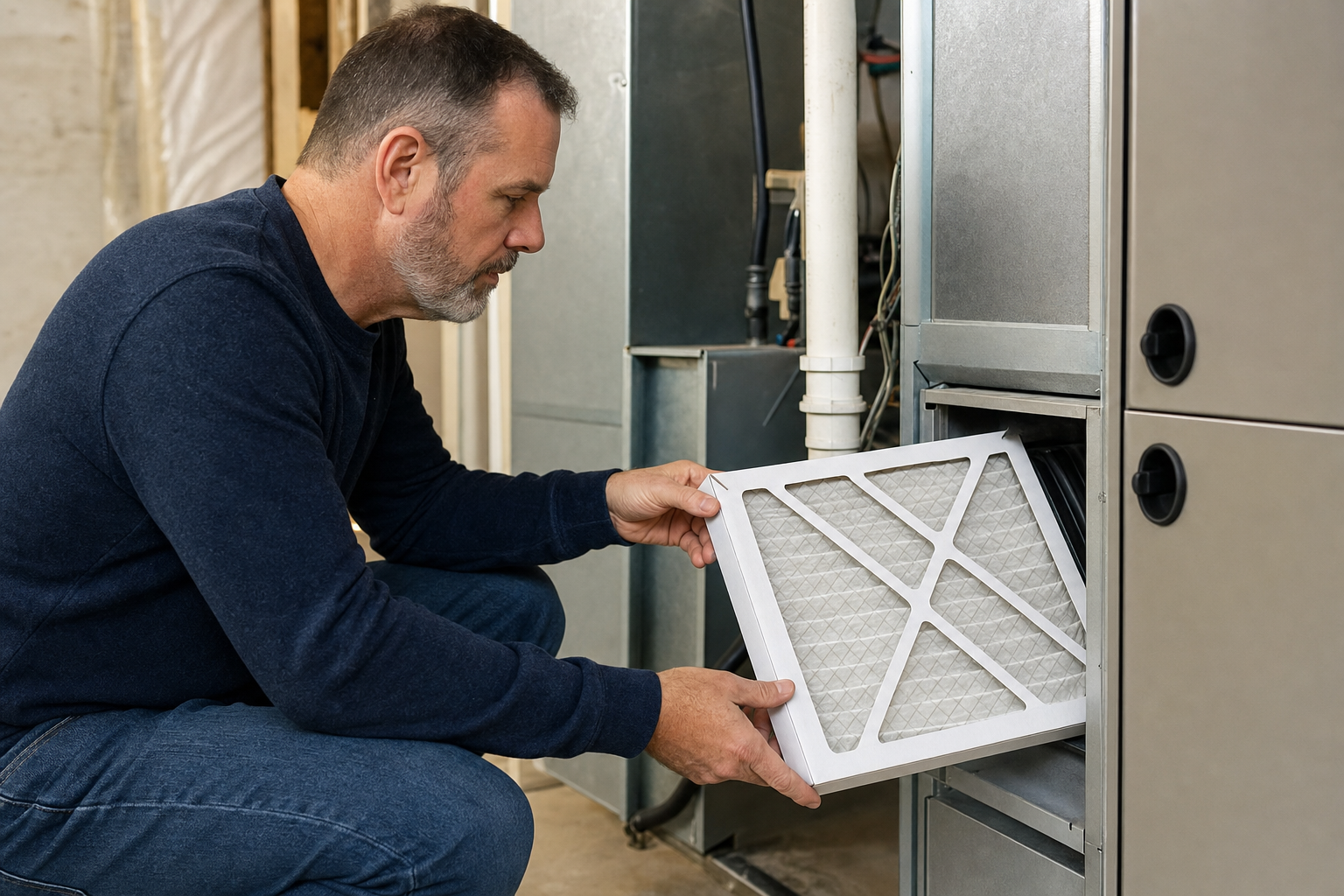
- Remove the filter carefully. Note the airflow arrow so the replacement goes in the same direction. The arrow should point in the direction of airflow, usually toward the furnace or air-handler blower.
- Examine the media. Compare it with a new filter if possible. Look between pleats instead of judging only the cardboard frame.
- Replace a loaded or damaged disposable filter. Do not shake, vacuum or wash a disposable filter unless its manufacturer specifically identifies it as reusable.
- Fit the correct size. The filter should sit snugly without bending or crushing. Large gaps around it can allow unfiltered air to bypass the media.
- Record the date. Write the installation date on the frame and set a reminder for the next monthly inspection.
A filter may need changing when its surface is broadly gray, dust is matted into the fibers or pleats, or it looks substantially different from a new one. Reduced airflow, a whistling sound at the filter slot, a bowed frame or excess dust around the home can also justify a closer check. Color alone is not a precise test, however, because dust varies in appearance. When a disposable one-inch filter is visibly loaded and you are uncertain, replacement is generally the safer choice.
Keep filter thickness, MERV and equipment problems separate
Thicker media filters can last longer because they usually provide more filter surface area. A four-inch filter is not four one-inch filters stacked together, though: it needs a compatible cabinet. Never force a thick filter into a narrow slot or improvise a filter arrangement that the equipment manufacturer has not approved.
Minimum Efficiency Reporting Value, or MERV, describes a filter’s particle-removal efficiency. It does not set a replacement interval. A higher MERV rating may capture smaller particles, but the correct choice must also allow the heating, ventilation and air-conditioning system to maintain adequate airflow. Use the highest-rated filter your system can accommodate, following the equipment instructions or advice from a qualified heating, ventilation and air-conditioning professional.
Homeowners comparing common ratings can also review this MERV 11 vs MERV 13 HVAC filter comparison. Regardless of the rating, continue monthly winter inspections.
Arrange professional service if weak airflow continues after fitting a clean, correctly sized filter and checking that supply and return registers are unobstructed. Service is also appropriate when filters repeatedly collapse, are pulled out of position, do not fit securely or become unusually dirty in a short time. Recurrent short cycling, overheating shutdowns or unusual blower noise can indicate an airflow, ductwork or equipment problem that a filter change will not solve. Do not run the furnace without its approved filter as a workaround.
Start the heating season with a clean, correctly sized filter, keep a spare on hand and inspect monthly. After a winter of recording changes, you will have a practical schedule for your own home rather than relying on a generic interval.