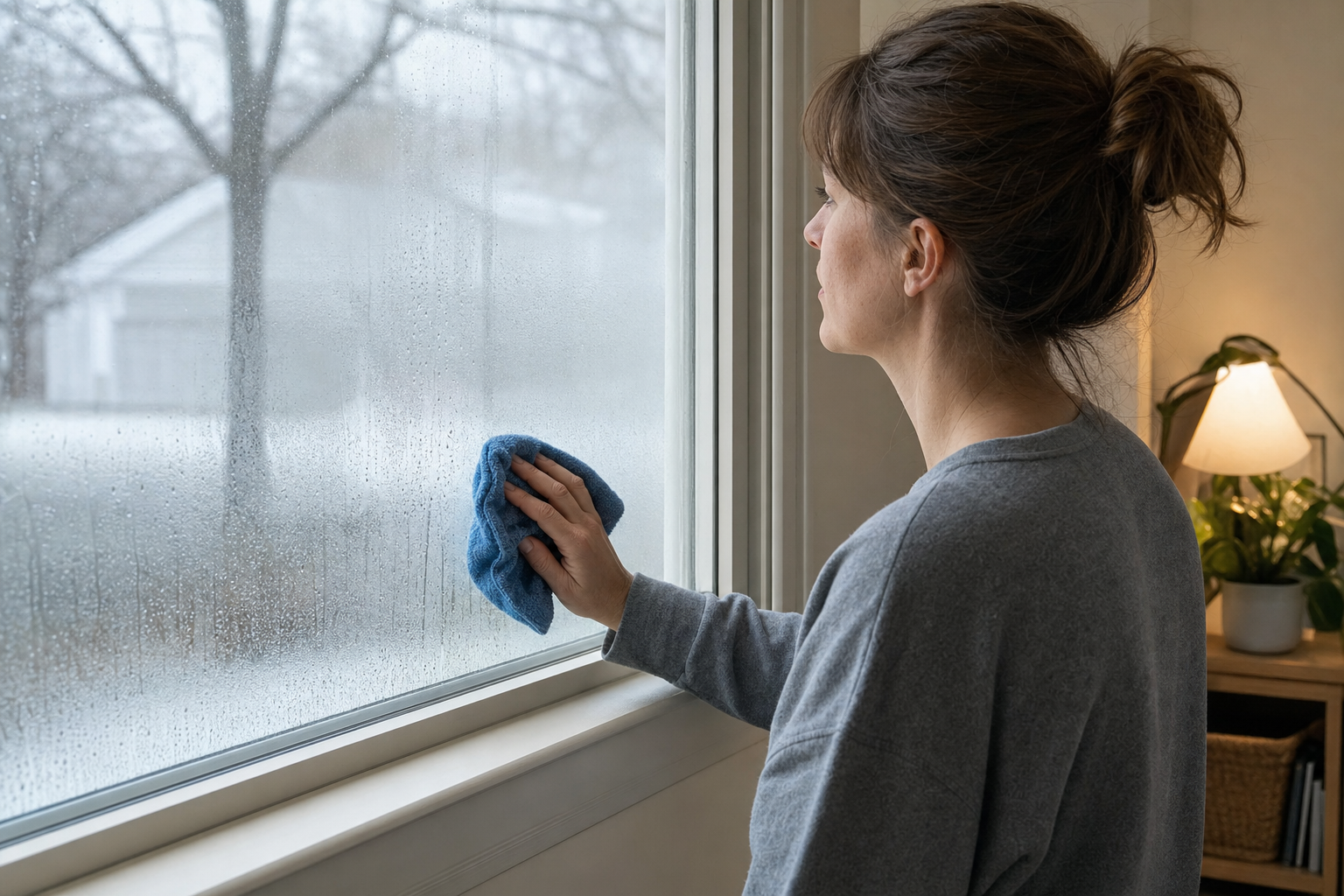
To stop condensation on the inside of windows, first confirm that the droplets are on the room-facing glass, then lower indoor humidity and improve airflow across the window. Start with a humidity meter, turn down any humidifier, use kitchen and bathroom exhaust fans that vent outdoors, and check the clothes dryer arrangement. Do not assume the window needs replacing: interior condensation usually reflects moist indoor air meeting cold glass, rather than a defective window.
Identify where the moisture appears
The location and timing of the water are useful diagnostic clues. Wipe the glass with a clean cloth from inside the room. Note whether the moisture returns during cold weather, after cooking or showering, or only when it rains.
| Moisture location | Likely explanation | First response |
|---|---|---|
| Room-facing glass | Humid indoor air is reaching its dew point on cold glass | Measure and reduce indoor humidity, then improve airflow |
| Outside surface | Exterior dew or condensation | Usually no action is needed |
| Between sealed panes | Possible insulated-glass seal failure | Contact the manufacturer or a window professional |
| Frame, trim or wall during rain | Possible rainwater entry or installation problem | Document the pattern and arrange an inspection |
Interior condensation can be touched and wiped away from inside. It is often worst near the bottom or edges of the glass early in the morning. It may affect several windows, especially in bedrooms, kitchens and bathrooms.
Exterior condensation is on the outdoor face of the glass, so it cannot be wiped away from inside the room. Like dew on grass, it can appear when the outside glass surface falls below the dew point of humid outdoor air. It usually evaporates as conditions warm or dry. Exterior condensation is generally harmless and may occur on efficient windows because relatively little heat passes from indoors to the exterior pane.
Moisture between double- or triple-pane glass looks like persistent fog, haze or droplets that cannot be reached from either side. In a factory-sealed insulated-glass unit, this usually indicates seal failure. It is different from moisture in the accessible space between a primary window and a removable storm window.
Water around the frame needs closer observation. Condensation can run down the glass and pool on the sill, but water that appears only during wind-driven rain may be entering through failed sealant, flashing, siding or another part of the wall. Stains above or beside the window, wet drywall, peeling paint and recurring dampness after storms support a leak diagnosis.
Why room-side window condensation forms
Warm indoor air can hold water vapour from showers, cooking, dishwashing, plants, humidifiers, drying laundry and normal breathing. When that air touches glass that is cold enough, it cools below its dew point and releases liquid water. Window edges and frames may become wet first because they are often colder than the centre of the glass.
Condensation therefore depends on both indoor humidity and window-surface temperature. A window may be in good condition but still collect water during an unusually cold night. Conversely, one window that is much colder than similar nearby windows may have an air leak, damaged weatherstripping, missing insulation around the rough opening or another installation issue.
A tightly sealed home can also experience more winter condensation if moisture is not removed effectively. Air sealing can reduce energy loss, but routine activities still add moisture indoors. Exhaust fans and, where fitted, whole-home ventilation help remove it.
Follow this low-cost action plan first
- Remove pooled water promptly. Wipe the glass, sash and sill with an absorbent cloth. Dry nearby curtains and other damp materials. The United States Environmental Protection Agency advises drying wet or damp materials and areas within 24 to 48 hours after a leak or spill to reduce the chance of mould growth.
- Measure indoor relative humidity. Place a digital hygrometer in the affected room, away from direct sunlight, heating vents and the wet glass. Record morning and evening readings for several days. During the heating season in colder climates, ENERGY STAR advises a relative humidity range of 30% to 40% to help prevent window condensation. This is not a universal setting: the suitable level varies with outdoor temperature, climate, window performance and household needs. In severe cold, lower humidity may be necessary.
- Turn down humidifiers. Reduce the output of portable units and check the control on any whole-home humidifier. If condensation is heavy, switch the humidifier off temporarily and see whether the windows improve. Compare a humidifier’s built-in display with a separate hygrometer where possible.
- Use bathroom and kitchen exhaust fans. Run the bathroom fan during showers and the kitchen fan while boiling water or cooking. Leave fans running for about 20 minutes afterwards. Confirm that each fan discharges outdoors. A recirculating range hood that filters and returns air to the kitchen does not remove water vapour.
- Check the clothes dryer. A conventional ducted dryer should exhaust directly outdoors; do not discharge its duct into a room, attic, basement, crawl space or garage. If the dryer is ducted, inspect accessible ductwork for disconnections, crushing or lint blockage, and check that the exterior termination operates during use. Ductless condensing dryers do not use an outdoor exhaust duct and should be installed and maintained according to the manufacturer’s instructions.
- Let room air reach the glass. Raise blinds, open curtains and leave space between window coverings and the glass, especially overnight. Avoid blocking baseboard heaters, radiators or supply registers below windows. Improving air movement helps keep the inside glass warmer and drier.
- Check unusually cold or drafty areas. Make sure the sash is fully closed and locked, since the lock may pull weatherstripping into proper contact. Look for damaged seals, visible gaps and cold air around the frame. Compare the problem window with others during similar weather. Renters should photograph persistent moisture, drafts or wet building materials and report them to the property manager rather than removing trim.
If humidity remains high after moisture sources and ventilation have been addressed, a dehumidifier may help. Choose and operate it according to the manufacturer’s directions. Avoid lowering humidity more than necessary: adjust gradually while monitoring both the hygrometer and the windows.
Know when the window or installation needs attention
Arrange a professional assessment if heavy condensation continues on one window while comparable windows remain dry, particularly when indoor humidity is controlled. A qualified window or home-performance professional can check glass temperature, air leakage, weatherstripping, insulation around the rough opening and airflow from the heating system.
Persistent fog or droplets inside a sealed double- or triple-pane unit suggest failed insulated glass. Ask the manufacturer or installer about warranty coverage and whether the insulated-glass unit or sash can be replaced. A failed unit does not automatically mean every window in the home needs replacement.
Call a qualified window installer or building-envelope professional when water appears during rain, stains spread into surrounding walls, wood becomes soft, or flashing appears damaged. Rain leaks can follow hidden paths, so sealing the first visible gap may conceal rather than solve the problem. Do not block exterior weep holes or drainage channels.
For condensation affecting many windows despite reasonable humidity, consider a home-performance assessment. The underlying issue may be inadequate exhaust ventilation, an improperly vented appliance, unusual household moisture production or poorly insulated window openings. Consider replacement only after the location and cause of the moisture are clear, especially when the existing frames are sound and ordinary humidity and airflow corrections have not yet been tried.
Sources
- United States Environmental Protection Agency: A Brief Guide to Mold, Moisture and Your Home
- United States Environmental Protection Agency: Main Ways to Control Moisture in Your Home
- ENERGY STAR: Residential Windows, Doors and Skylights
- ENERGY STAR: Dehumidifiers
- Pella Owner’s Manual: Troubleshooting Condensation Between Insulated Glass Panes