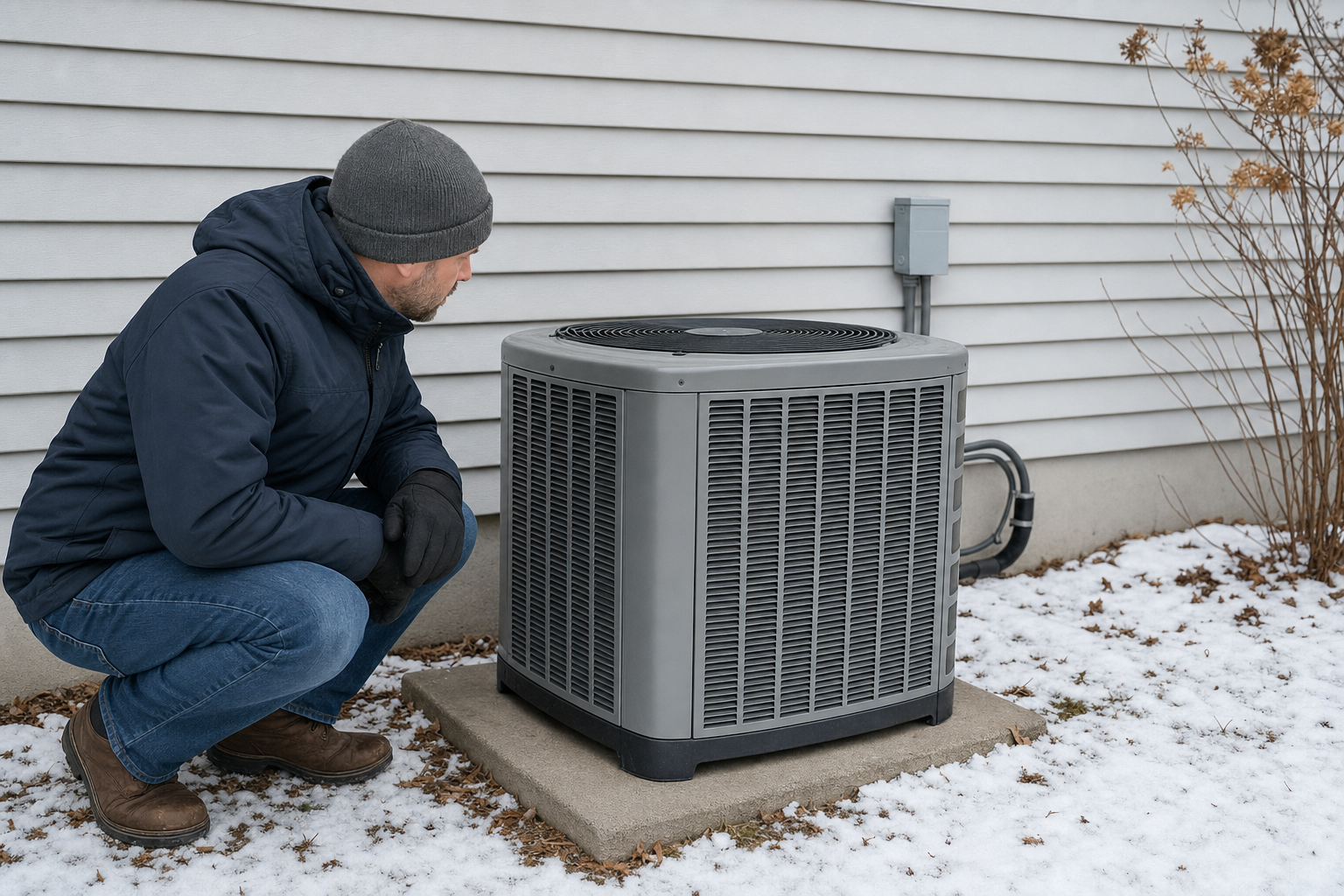
Most modern cooling-only central air-conditioning units do not need a full winter cover. They are designed to remain outdoors through rain, snow and freezing temperatures. A solid cover can trap moisture and provide shelter for pests, creating more risk than ordinary winter weather. The important exception is a heat pump: if the outdoor unit provides heat during winter, it must remain uncovered so air can move through it.
Before buying a cover, identify the equipment. Depending on the model, the right choice may be no cover, a breathable top-only guard or manufacturer-approved protection designed for that specific unit.
Identify your outdoor unit before covering it
Central air conditioners and heat pumps often look nearly identical. A cooling-only air conditioner transfers heat outdoors during warm weather and is normally idle in winter. A heat pump reverses that process to heat the home, so its outdoor fan and coil may operate throughout the heating season.
Use these checks without opening the cabinet:
- Read the nameplate. Look for the words “heat pump,” or record the manufacturer and complete model number. Use the manufacturer’s documentation rather than appearance alone.
- Check the manual. The owner’s manual, installation manual or product description should identify the equipment as an air conditioner, heat pump, mini-split or packaged system.
- Look at the thermostat. Settings such as Auxiliary Heat or Emergency Heat often indicate a heat-pump system, although thermostat labels vary.
- Observe normal winter operation. An outdoor unit that runs while the thermostat is heating the home is usually a heat pump. Do not deliberately test or cycle equipment merely to make this check.
- Ask the installer or an HVAC professional. This is the safest option if labels are damaged, the system has multiple fuel sources or you cannot locate the correct manual.
| Equipment type | Typical winter use | Cover decision |
|---|---|---|
| Cooling-only central AC unit | Normally idle | Usually leave it uncovered. Consider a breathable top-only guard if falling leaves, branches or roof debris are a persistent problem and the manufacturer permits it. |
| Air-source heat pump | Heats the home during winter | Do not wrap or cover it. Keep the top, sides and surrounding area clear for airflow. Use only a model-approved snow guard or canopy that maintains the required clearances. |
| Mini-split outdoor unit | May provide cooling only or heating and cooling | Check the exact model. A mini-split heat pump must remain unobstructed in winter. A cooling-only model should also follow its own manual. |
| Packaged HVAC system | Varies by configuration | Do not assume it is idle because the cabinet is outdoors. Packaged heat pumps and combination heating systems may operate in winter. Follow the model-specific manual. |
Why a solid winter cover can cause problems
Outdoor HVAC cabinets are designed to drain water and tolerate normal exposure. Snow and rain reaching a modern condenser are not, by themselves, reasons to wrap the entire unit in plastic or a waterproof tarp.
A tight, non-breathable cover can hold moisture against the cabinet and coil. Manufacturers warn that this can contribute to corrosion, mold or mildew. Wind can also make a loose tarp rub against the painted finish, while pooled water can weigh down the cover.
A covered cabinet may also attract mice and other small animals seeking shelter. Nesting material, droppings and chewed wiring or insulation can cause damage that an uncovered unit might avoid.
The greatest risk is accidental operation. Air conditioners and heat pumps need unobstructed intake and discharge airflow whenever they run. Operating equipment while it is covered can cause system damage.
Never operate outdoor HVAC equipment with its airflow blocked. If there is any possibility that the unit will run during winter, do not use a seasonal wrap. Do not reach through its grille, remove panels, handle wiring or attempt internal cleaning yourself.
When a breathable top cover may be useful
A limited cover can make sense for a cooling-only condenser located beneath deciduous trees, a roof edge or another source of falling debris. A fitted, ventilated top guard can reduce the amount of leaves, acorns and twigs entering through the fan opening while leaving the cabinet sides exposed.
The product should be intended for outdoor HVAC use, securely fitted and permitted by the manufacturer. Breathable material is preferable to a solid wrap. A rigid top accessory designed for the unit may be a better choice than fabric because it can direct debris and precipitation away without enclosing the sides.
For a cooling-only unit that will be covered, Goodman advises disconnecting high-voltage power to the outdoor unit to prevent accidental operation. Do not do this for a heat pump that is needed for winter heating, and do not shut off power unless the equipment documentation and your installer confirm that it is appropriate for your system.
A top guard is not a substitute for safe placement. If roof runoff, icicles or sliding snow regularly strike the equipment, ask an HVAC contractor whether a properly positioned canopy, snow hood or relocation is appropriate. Clearances above and around the unit matter, especially for an operating heat pump.
Manufacturer recommendations are not completely uniform:
- Lennox says modern air conditioners rarely need a full cover and warns that non-breathable coverings can trap moisture and attract pests. It notes that top protection may help where leaves or falling debris are a problem.
- Trane says a breathable protective cover can be used during the off-season when an air conditioner is not operating. It says not to use a tarp or other solid cover and never to run the air conditioner while covered.
- Goodman notes that a cover can limit debris accumulation but warns that operating the outdoor unit with a cover in place can cause damage.
- Daikin tells owners to discuss a condensing-unit cover with their dealer first and specifies breathable fabric if a cover is used.
Find the owner’s or installation manual using the complete model number, not simply the brand name. Product families can have different airflow patterns and approved accessories. Review the warranty terms as well: coverage depends on the manufacturer’s written warranty and the cause of any failure.
Use safe fall maintenance instead of wrapping the unit
For most homeowners asking whether to cover an AC unit in winter, basic exterior care is safer and more useful than enclosing it. Complete these steps after the main cooling season:
- Remove loose debris from the surrounding ground. Rake away leaves, grass clippings and twigs without pushing them into the cabinet.
- Trim nearby vegetation. Keep shrubs, vines and weeds from crowding the unit. Follow the clearance in its manual; Trane gives two feet as a general rule of thumb for central air conditioners.
- Check for overhead hazards. Redirect routine gutter discharge away from the equipment. Arrange professional help if branches, roof ice or heavy sliding snow could strike it.
- Inspect from the outside. Look for visible cabinet damage, a shifted base, pest activity or unusual corrosion. Do not remove access panels or try to straighten coil fins.
- Maintain indoor airflow. Replace or clean the indoor filter according to the equipment instructions. If you are choosing between common filter ratings, see this MERV 11 vs MERV 13 HVAC filter comparison.
- Arrange professional maintenance when needed. A technician should handle coil cleaning, internal inspection, electrical work, refrigerant issues and unusual noise or persistent ice buildup.
For an operating heat pump, check after storms and keep drifting snow and loose debris away from the air inlets and outlet. Light frost can be normal during winter operation, but heavy ice or ice that does not clear can indicate a problem. Do not chip ice with tools, pour hot water on the unit or place a tarp over it. Persistent ice, roof runoff striking the unit or unusual operating noise should be assessed by a qualified HVAC professional.
If you cannot confirm whether the equipment provides winter heat, leave it uncovered until the model documentation or an HVAC contractor identifies it. That choice preserves airflow and avoids the most damaging covering mistake.