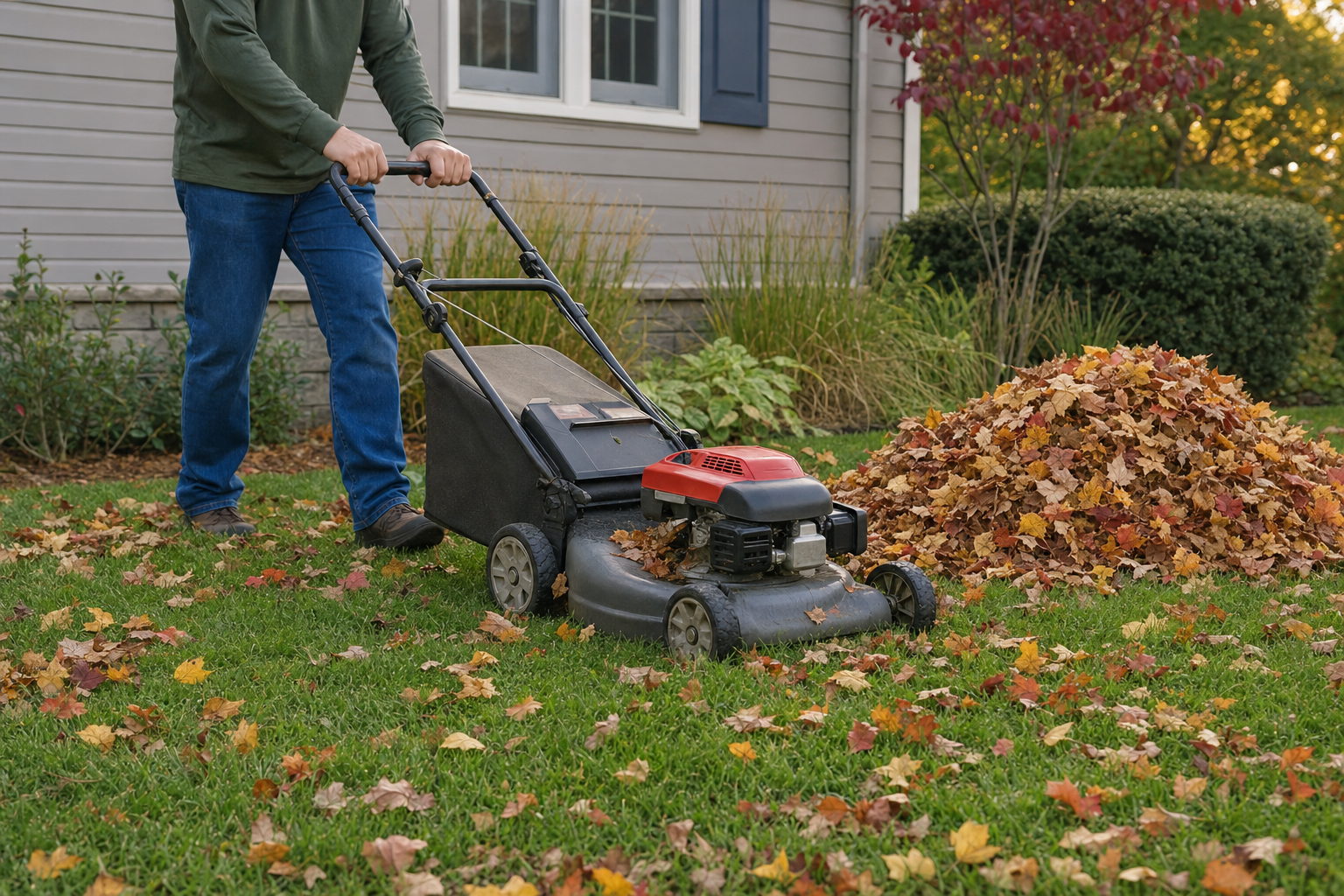
For most established lawns, mulch a light layer of dry leaves with a mower and collect the excess. Finely chopped leaves can decompose in the turf when grass remains clearly visible. As a practical limit, begin collecting leaves when less than about 50 percent of the lawn surface is visible after mowing. Rake, bag or move leaves elsewhere when they are wet, matted, unusually thick or covering the grass.
The choice is not between removing every leaf and leaving every leaf untouched. Leaf coverage, moisture, lawn condition and location should determine what you do each time leaves fall.
Use this quick decision framework
| What you see | Best action | Why |
|---|---|---|
| Dry, scattered leaves with most grass visible | Mulch them into the lawn | Small pieces can settle into established turf and break down. |
| Less than about half the lawn is visible after mowing | Begin collecting excess leaves | The lawn has reached the recommended practical coverage limit. |
| Thick piles or wet, stuck-together leaves | Rake or collect them | Mats can block light and hold moisture against the turf. |
| Thin, shaded, damaged or newly seeded turf | Use a lower threshold and remove more leaves | Young or stressed grass is more easily covered and weakened. |
| Leaves on garden soil | Keep or relocate them as mulch where suitable | Shredded leaves add organic matter and can protect bare soil. |
| Leaves on sidewalks, driveways, streets or near drains | Sweep or collect them promptly | Wet leaves can be slippery, and yard debris can clog drains and pollute waterways. |
The visibility test is more useful than trying to measure leaf depth. University of Minnesota Extension recommends mulching leaves until only about half of the lawn surface can be seen. When less than 50 percent remains visible, collect the excess for composting or use elsewhere in the landscape.
Moisture changes the decision. Dry leaves are easier for a mower to lift, cut and distribute. Wet leaves flatten, clump and can clog equipment. Wait for a reasonably dry day when possible. If wet leaves are likely to remain in a mat because more rain or snow is expected, collect them rather than leaving them over the grass.
Lawn condition matters too. Dense, established turf generally tolerates more finely shredded material than sparse grass. Be more conservative on newly seeded areas, compacted soil, shaded turf, low spots that stay damp and sections already affected by disease or poor drainage.
Why mulched leaves can help but whole leaves can hurt
Whole leaves and finely mulched leaves behave differently. Intact leaves overlap easily, and wet layers can stick together to form a dense cover over the lawn. That cover reduces the light reaching turf and can keep the surface damp. Excessive leaf residue left through winter can also increase the risk of snow mold damage.
A mower breaks dry leaves into pieces that can fall between grass blades rather than remaining as a continuous layer on top. As the fragments decompose, they return nutrients and organic matter to the soil. This can improve soil structure, water infiltration, moisture retention and root growth.
Leaf mulching may also help limit weeds by covering small bare spaces where weed seeds could germinate. Michigan State University Extension reports that, after repeated annual leaf mulching, its turf specialists observed large reductions in dandelions and crabgrass. Chopped leaves are not a substitute for addressing bare soil, mowing correctly or using other appropriate weed-control measures.
The benefits depend on both processing and quantity. A coating of recognizable leaves that hides the grass is not finished mulch. If mowing leaves rows, piles or a continuous brown layer, make another pass or collect part of the material.
How to mulch leaves effectively
- Mow before the layer becomes deep. Deal with leaves regularly during the main drop rather than waiting for one large cleanup. Under heavily shedding trees, this may mean mowing weekly or more often.
- Choose a reasonably dry day. A little dew is usually manageable, but soaked leaves are harder to chop and can make the lawn slippery.
- Set the mower deck high. Michigan State University Extension advises using the highest mower setting for leaf mulching. Avoid cutting the grass very short late in the growing season.
- Make a slow first pass. Use a mulching setting only if your mower is designed for it, and follow the manufacturer’s operating instructions.
- Inspect the result. The pieces should be small and scattered, with grass blades clearly visible through them.
- Make a second pass if needed. Mow across the first direction to reduce fragments further and distribute them more evenly.
- Collect what remains too heavy. Use a mower bag, rake or leaf vacuum when chopped material still leaves less than about half the lawn visible.
A conventional mower can mulch leaves, although a dedicated mulching mower or mulching blade may do the job more efficiently. Do not force a mower through deep, wet piles. Before clearing a clog or inspecting the deck, shut down the mower and follow its manufacturer’s safety instructions.
If you need equipment for large quantities or hard-to-reach areas, compare the cleanup roles described in Leaf Blower or Vacuum Mulcher for Fall Cleanup. A blower is useful for moving leaves into rows or piles, while a vacuum mulcher can reduce their volume for composting or use in beds.
Move excess leaves to the right place
Collecting leaves from the lawn does not make them waste. It simply means the turf has reached its capacity. Where local rules allow, use excess leaves elsewhere on the property before sending them to municipal collection.
- Garden beds: Spread shredded leaves over bare soil and around established perennials or shrubs. Smaller pieces are less likely to blow away or form a water-shedding mat. Keep mulch away from tree trunks and plant stems.
- Vegetable gardens: Leaves can cover unused soil over winter, suppress some weeds and add organic matter as they break down. Shredded leaves generally decompose faster than whole leaves.
- Compost piles: Dry fallen leaves are a carbon-rich “brown” material. Shredding speeds decomposition; mix them with suitable nitrogen-rich materials and maintain adequate moisture and airflow.
- Leaf mold: Store leaves in a contained pile or ventilated bags and allow fungi to break them down gradually into a crumbly soil amendment.
- Habitat areas: In a designated garden bed or out-of-the-way corner, leaf litter can shelter overwintering insects and other wildlife. This is a better option than leaving a heavy layer on managed turf.
- Municipal collection: Follow local requirements for paper bags, carts, curbside collection or community compost sites. Rules vary, including whether loose curbside piles are allowed.
Separate leaves from plants with disease problems from healthy leaves you intend to reuse or compost. Local extension guidance can help with recurring diseases, because the appropriate handling depends on the plant and disease involved.
Treat paved surfaces differently from lawns and planting beds. Sweep leaves from steps and sidewalks because wet foliage can be slippery. Remove leaves from driveways, gutters and streets before rain carries them away. Never rake, blow or hose yard debris into a storm drain: the U.S. Environmental Protection Agency warns that leaves, grass clippings and other debris can clog storm pipes and contribute to polluted waterways.
After each major leaf drop, ask four questions: Are the leaves dry, can the mower chop them finely, is the turf healthy, and can you still see at least half the lawn? If the answer to all four is yes, mulch. If not, collect enough leaves to protect the grass and relocate them to a garden, compost system or approved community collection service.
Sources
- University of Minnesota Extension: Fall leaf mulching is good for your lawn
- Michigan State University Extension: Mulch leaves into turf for a smart lawn
- Illinois Extension: Don’t rake fall leaves, recycle them
- Illinois Extension: Recycle your leaves for a better garden and environmental benefits
- U.S. Environmental Protection Agency: Stormwater smart lawn care