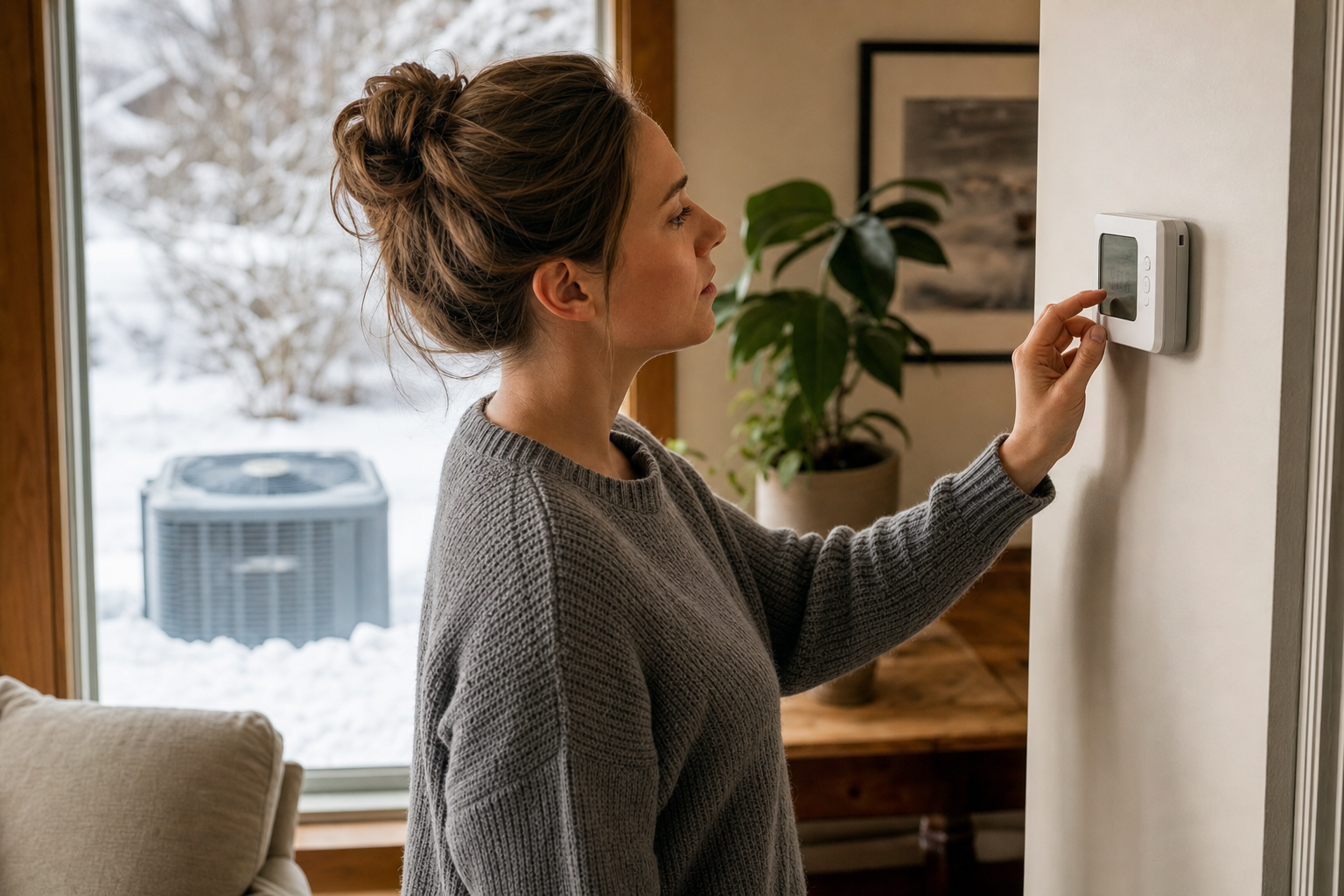
Use Emergency Heat only when the heat pump’s outdoor unit has failed, the system cannot keep the home safely warm, or the equipment manual or a qualified heating, ventilation and air conditioning technician directs you to use it. Keep the thermostat in normal Heat mode during ordinary cold weather. Emergency Heat is a temporary backup mode, not a setting that homeowners normally need to select whenever temperatures fall below freezing.
Emergency Heat and Auxiliary Heat serve different purposes
A heat pump normally warms a home by moving heat from the outdoor air indoors. Many systems also have a secondary heat source. In an all-electric installation, the backup is commonly a set of electric resistance heating elements inside the air handler. A dual-fuel system instead pairs the heat pump with a gas, propane or oil furnace.
Auxiliary Heat, often displayed as AUX, operates automatically. The thermostat or equipment controls may activate it when the heat pump needs additional capacity, such as during very cold weather, recovery from a large temperature setback or an outdoor-unit defrost cycle. Depending on the equipment, auxiliary heat may run with the heat pump or temporarily replace it.
Emergency Heat, sometimes labelled EM Heat or E Heat, is usually selected manually. On many systems, this mode locks out the compressor and outdoor unit, then relies on the backup source to maintain the thermostat setting. Google’s guidance for Nest thermostats likewise distinguishes automatically controlled auxiliary heat from manually selected emergency heat.
The exact operating sequence varies. Some thermostats display Backup Heat or Alternate Heat, while communicating systems may manage the changeover automatically without offering a separate Emergency Heat control. Check the thermostat and equipment manuals before assuming that your system operates like another heat pump.
Cold weather and defrost cycles are usually normal
Do not switch to Emergency Heat merely because the outdoor temperature is below freezing. Modern heat pumps are designed to operate in cold conditions. ENERGY STAR cold-climate heat pumps undergo low-temperature performance testing at 5°F, and qualified models can continue operating below that temperature.
There is no universal outdoor temperature at which every homeowner should manually select Emergency Heat. The need for supplemental heating depends on the heat pump’s capacity, the home’s heat loss, local weather, thermostat configuration and installer settings. Dual-fuel systems may have an automatic changeover temperature that determines when the furnace should replace the heat pump.
Automatic AUX heat may appear when:
- The heat pump needs help meeting demand during cold weather.
- You raise the thermostat several degrees at once.
- The system is recovering from a scheduled temperature setback.
- The outdoor unit is completing a defrost cycle.
Light frost on the outdoor coil can be normal. During defrost, the system briefly redirects heat to the outdoor coil to melt frost. You may see steam rising from the unit, hear a change in operating sound or feel temporarily cooler air from the indoor vents. The frost should clear as the cycle finishes.
A solid coating of ice or ice that remains after repeated defrost cycles is not normal. Carrier’s troubleshooting guidance advises against chipping ice from the coil because that can damage the equipment. Persistent ice, weak heating or an outdoor fan that is not operating requires professional diagnosis.
Long winter cycles are not automatically evidence of failure either. Heat pumps often run more continuously than furnaces because they deliver heat gradually. For more detail, see When a Heat Pump Runs Constantly in Winter.
Use Emergency Heat temporarily when the heat pump fails
Emergency Heat may be appropriate when there is good reason to believe the outdoor heat-pump section is not working but the indoor backup source remains available. Possible warning signs include:
- The indoor temperature keeps falling during an extended call for heat.
- The outdoor unit does not run after allowing for normal start delays, defrost operation and any configured temperature lockout.
- Heavy ice covers the outdoor coil and does not clear.
- The equipment makes grinding, screeching, repeated loud buzzing or another new and severe noise.
- A circuit breaker trips repeatedly or the thermostat displays an equipment fault.
- Air is moving through the vents, but the system produces little or no heat in conditions it previously handled normally.
If selecting Emergency Heat restores warm air after the outdoor unit appears to have failed, leave it on only as long as necessary to maintain safe indoor conditions while arranging service. Do not use the setting for weeks to avoid repairing an unresolved fault.
In an all-electric system, extended Emergency Heat operation can be expensive because electric resistance elements generally supply all the heat while the more efficient compressor remains off. Automatic AUX operation can also increase electricity use, although occasional auxiliary heating is a normal part of many system designs.
A dual-fuel system works differently because its emergency or alternate source may be a combustion furnace rather than electric heating elements. Operating cost then depends on electricity and fuel prices, equipment efficiency and control settings. Do not override installer-configured balance points without guidance.
Emergency Heat is not a workaround for an electrical or combustion hazard. If you see sparks or smoke, or smell melting plastic or a strong electrical burning odour, turn the system off if you can do so safely and request urgent help. If a carbon monoxide alarm sounds, leave the home immediately and call emergency services from outside. The United States Consumer Product Safety Commission advises leaving the building and obtaining professional assistance when carbon monoxide exposure is suspected.
Make safe checks before requesting service
You can perform several basic checks without opening equipment panels, altering thermostat wiring or touching refrigerant components:
- Confirm the thermostat settings. Set the system to Heat, choose a temperature above the current room temperature and use the Auto fan setting unless the manufacturer or installer recommends otherwise.
- Read the display. Record any fault code, AUX indicator, Emergency Heat symbol or equipment alert. A photograph can help the technician identify what occurred.
- Inspect the filter. Replace a visibly dirty disposable filter with the correct size and type. Restricted airflow can reduce heating performance and make the system run longer.
- Check registers and return grilles. Move furniture, rugs and stored items that block airflow. Do not close large numbers of supply registers in an attempt to redirect heat.
- Look at the outdoor unit. From a safe position, remove loose leaves or light snow that is blocking airflow around the cabinet. Do not remove panels, reach inside, pour hot water on the coil or strike accumulated ice.
- Check the electrical panel. Look for an obviously tripped, clearly labelled heating-system breaker. Do not touch breakers or electrical equipment if the panel or surrounding area is wet. Do not repeatedly reset a breaker that trips again.
- Allow for a normal delay. Heat pumps may pause for several minutes before starting, after a power interruption or while changing modes. Wait briefly unless there is smoke, a burning smell, sparking or an alarming mechanical noise.
Request professional service if the home continues getting colder, Emergency Heat is needed beyond a short temporary period, AUX heat operates unusually often in mild weather, thick ice does not clear, a breaker trips repeatedly or the equipment produces abnormal sounds or odours. Tell the technician when the problem began, what the thermostat displayed, the outdoor conditions and whether Emergency Heat produced warm air.
If you are unsure how your system is supposed to operate, consult its manuals or contact the company that installed or services it. Do not open electrical compartments or attempt repairs involving wiring, capacitors, refrigerant, the compressor or defrost controls.