How often should a furnace be serviced? For most homes, arrange professional service once a year, preferably before the heating season. ENERGY STAR recommends annual pre-season checkups and suggests scheduling heating-system maintenance in the fall. For gas, propane and oil furnaces, annual professional inspection is especially important because the equipment burns fuel and must vent combustion gases safely. The visit should be appropriate to the furnace type, condition and manufacturer instructions; it does not automatically mean extensive cleaning or replacement parts every year.
Professional service is different from changing an air filter, which you may need to do several times during the heating season. It is also different from a repair visit after a fault develops. Annual maintenance is intended to identify safety, airflow and performance issues before the furnace is relied on every day.
Schedule service once a year before cold weather
Late summer or early fall is usually the best time to book. September or October works in much of the United States, although homes in colder areas may benefit from booking earlier. Heating contractors become busier after the first cold spell, when no-heat calls take priority.
If you missed the pre-season window, do not wait until next fall. Have the furnace checked when an appointment is available, particularly if it has not been serviced within the past year or has developed a performance problem.
The owner’s manual remains the most important model-specific guide. Its maintenance schedule may call for particular inspections or homeowner tasks. Age, heavy use, renovation dust, flooding, repeated faults or damage to the venting system can also justify service sooner than the annual visit. Keep service invoices and reports, especially while the equipment is under warranty, but read the written warranty before assuming that a paid maintenance plan is required.
What a proper furnace service visit should include
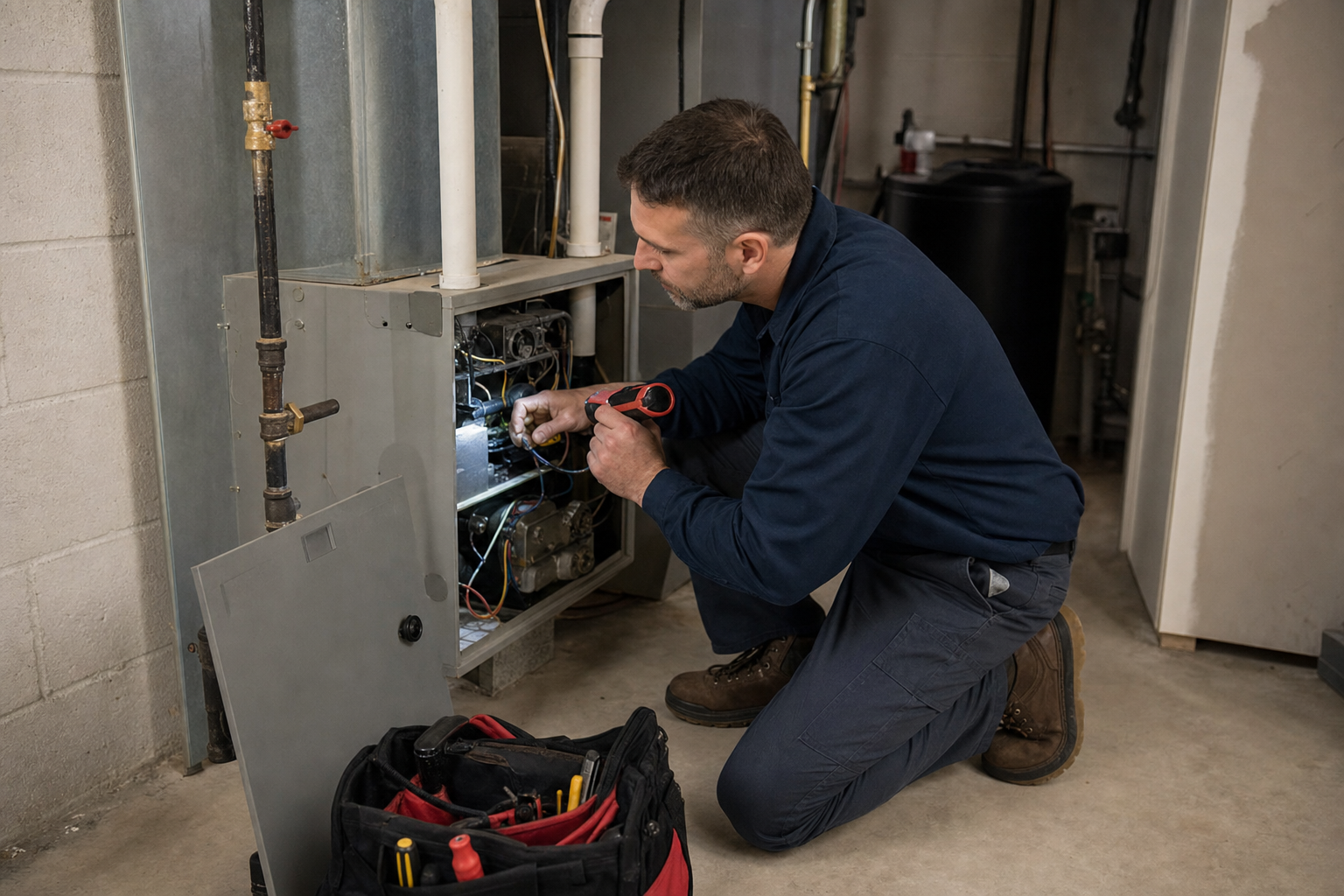
A worthwhile pre-season inspection is more than changing a filter and looking at the cabinet. The exact work varies by model and fuel, but a technician should be able to explain which of these tasks apply and why:
- Confirm that the thermostat and furnace start, operate and shut down normally.
- Inspect operating and safety controls.
- Check electrical connections and measure voltage and current where appropriate.
- Inspect the blower and accessible airflow components; clean or adjust them if needed.
- Check that the filter is the correct size, type and orientation.
- For gas, propane and oil equipment, inspect fuel connections, burner operation, combustion, venting and the heat exchanger.
- For a condensing furnace, inspect the condensate drain, trap, hoses and the intake and exhaust system as applicable.
- Look for corrosion, water leakage, soot, damaged wiring and other deterioration.
- Explain any deficiencies and obtain approval before making repairs beyond the agreed service.
Not every component needs the same work every year. For example, many modern blower motors are permanently lubricated, so they should not be oiled. Likewise, a technician should not recommend cleaning or replacing a part without a model-specific reason. Ask for an explanation of a problem, the relevant test result where applicable, and a written estimate for non-routine repairs.
For a fuel-burning furnace, ask whether the service includes combustion and venting checks. ENERGY STAR lists checks of fuel connections, gas pressure, burner combustion and the heat exchanger as heating-specific maintenance items for gas or oil equipment.
Service needs by furnace type
Gas and propane furnaces
Annual service should focus on ignition, burners, flame operation, safety controls, the heat exchanger, venting, blower operation and airflow. A technician may check gas pressure when the manufacturer’s procedure calls for it. Do not remove burner panels, adjust gas controls or attempt to clean combustion components yourself.
Oil furnaces
Oil-fired equipment benefits from consistent annual professional service. Depending on the appliance and burner instructions, this may include replacing the oil filter and nozzle, inspecting the pump strainer and electrodes, removing soot where necessary, checking draft, and carrying out instrument-based combustion testing. Oil smell, visible soot or fuel leakage needs prompt attention rather than waiting for the next annual appointment.
Electric furnaces
Electric furnaces have no burners, fuel supply or combustion vent, so gas-furnace checks do not apply. Service instead focuses on electrical connections, heating elements, relays or sequencers, limit controls, blower operation and airflow. Internal electrical work is hazardous even when the thermostat is off, and should be left to a qualified technician.
High-efficiency condensing furnaces
Condensing gas furnaces produce water during normal operation. Their service visit should include the condensate drain system and model-specific checks of the intake and exhaust piping. Water around the furnace, recurring drain blockages, corrosion, or an intake or exhaust termination blocked by snow or debris needs attention. Do not open sealed combustion compartments or put chemicals into a condensate drain unless the owner’s manual specifically gives that procedure.
Safe homeowner maintenance and warning signs
The main routine task for most homeowners is checking the air filter. ENERGY STAR advises checking filters monthly in furnaces, central air conditioners and heat pumps, then cleaning or replacing them when dirty. Follow the filter and furnace instructions: a thick media filter can have a different service interval from a basic one-inch filter. More frequent checks may be needed with pets, renovation dust, smoke, heavy use or unusually dusty conditions.
You can also safely:
- Keep storage, dust and combustible materials away from the furnace.
- Keep supply and return registers clear of rugs, furniture and boxes.
- Check accessible outdoor intake and exhaust openings for snow, leaves or obvious obstruction without dismantling them.
- Replace thermostat batteries when applicable.
- Test smoke and carbon monoxide alarms according to their manufacturers’ instructions.
A brief dusty smell when the furnace first runs for the season can be normal if it steadily fades. Persistent smoke, a hot electrical or melting-plastic smell, a strong fuel-oil smell, or a rotten-egg gas odor is not normal. See why a furnace smells when first turned on for guidance on distinguishing a temporary startup smell from a warning sign.
Arrange prompt service for repeated shutdowns, short cycling, delayed ignition, unusual banging or rumbling, soot, water around the furnace, breaker trips, damaged venting, suddenly uneven heating or an unexplained increase in heating use. If a carbon monoxide alarm sounds, move everyone outside to fresh air, call 911 or the fire department from outside, and do not re-enter until emergency responders say it is safe. If you smell or hear leaking gas, leave immediately and contact the gas utility or emergency services from outside; do not operate electrical switches, appliances or phones inside the home.
Choosing a contractor and assessing maintenance plans
Before booking, ask the contractor:
- What tasks are included for my furnace type and model?
- Does the visit include combustion and venting checks for fuel-burning equipment?
- Will I receive a written report identifying any recommended repairs?
- Are filters, cleaning and minor adjustments included or billed separately?
- What licensing, certification or training does the technician hold where state or local rules apply?
- Will you obtain my approval before performing repairs?
A maintenance plan can be useful when it provides a model-appropriate inspection, convenient scheduling or discounts you expect to use. Compare its annual cost with a standalone visit and read the exclusions. Confirm how many visits are included, whether the agreement renews automatically, what counts as an emergency call, and whether discounts apply to parts, labor or both.
Be cautious when a contractor says every warranty requires that company’s proprietary plan. Ask for the relevant provision in the written warranty or owner’s manual. For most households, the practical approach is one professional inspection each year, regular filter checks and basic housekeeping between visits, plus prompt service when the furnace shows a safety or performance warning.