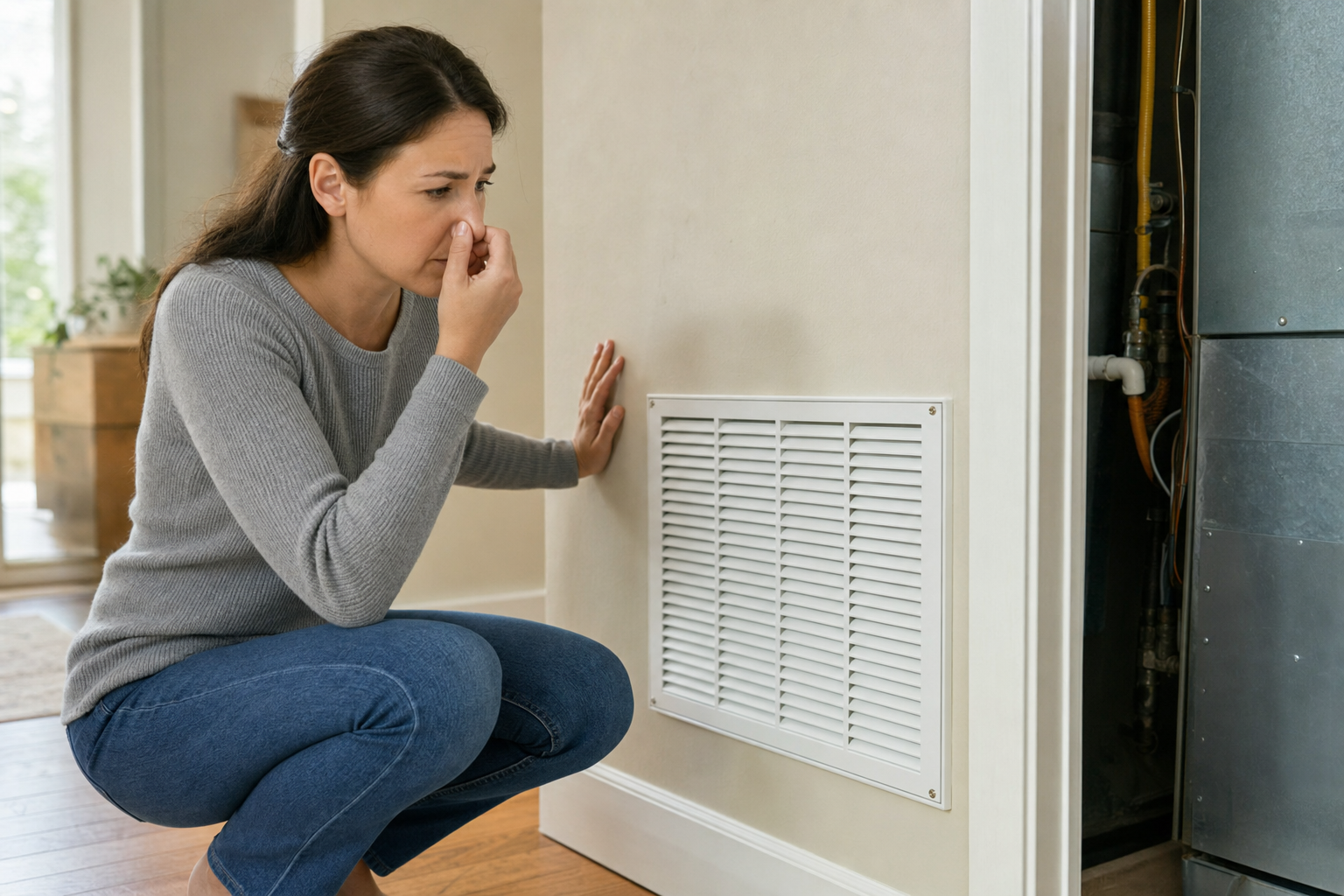
A light dusty or burnt-toast smell when you first turn on the furnace for the heating season is usually normal. Dust and debris can settle on heating components while the system is unused, then smell briefly as they warm. The odor should steadily fade rather than intensify. Manufacturer guidance varies: it may clear in about 10 to 15 minutes, but a first seasonal startup odor can sometimes take a few hours to dissipate. A smell of hot wiring, melting plastic, oil, or rotten eggs; visible smoke; or an odor that becomes stronger needs a different response.
Use the smell and its duration to decide what to do
First, confirm that the odor began when the heating system started and seems to be coming from the supply registers. Do not put your face close to the furnace, remove service panels or reach inside the equipment. Instead, note what the smell resembles, whether it is fading, and whether there is smoke, sparking, unusual noise or an alarm.
| What you notice | Likely concern | What to do |
|---|---|---|
| Light dusty or burnt-toast smell that steadily fades | Dust or debris burning off after seasonal inactivity | Monitor the system and check the accessible air filter |
| Dusty smell that remains strong, worsens or lasts beyond a few hours | Excess debris, restricted airflow or another system problem | Turn the furnace off and arrange professional service |
| Hot wiring, electrical, fishy or melting-plastic smell | Possible overheating motor, wiring or electrical component | Turn the furnace off and contact a qualified heating, ventilation and air-conditioning professional |
| Strong oil smell from an oil furnace | Possible oil leak or burner problem | Turn the system off if the odor is strong or persistent, then arrange professional service |
| Visible smoke or a smoke alarm | Possible fire or severely overheated material | Get outside if fire is suspected and call 911 from outside |
| Musty or damp odor that returns | Dirty or wet filter, retained moisture, or mold or mildew in part of the system | Check the accessible filter, then arrange service if the odor continues |
| Rotten-egg or sulfur smell | Possible natural-gas leak | Leave immediately and call the gas utility or 911 from outside |
A temporary dust odor should weaken as the system runs. If it stays strong, returns during every heating cycle or changes into a sharper chemical, electrical or plastic smell, shut the system off and have it inspected. Opening a window may make a mild startup odor less noticeable, but ventilation is not a remedy for an electrical fault, combustion problem or gas leak.
When a dusty furnace smell is probably normal
Dust can collect on furnace surfaces, in the air handler and near supply registers while the heating system is not in use. When those surfaces become hot, the dust can produce an odor similar to burnt lint, toast or a dusty space heater. A routine startup odor is generally mild, noticeable through more than one register and less apparent as the furnace continues to run.
You can monitor the odor if all of the following are true:
- It is the first or one of the first heating cycles of the season.
- The smell resembles dust rather than plastic, chemicals, fuel oil or electrical wiring.
- There is no visible smoke, sparking or unusual noise.
- No smoke or carbon monoxide alarm is sounding.
- The odor is steadily fading rather than intensifying.
Turn the system off and arrange service if the odor remains strong beyond a few hours, becomes sharper, or returns every time the furnace starts. A normal seasonal dust odor should resolve rather than become a repeating pattern.
Safe checks homeowners can make
The main homeowner check is the air filter. A dirty or clogged filter can reduce airflow, make the system work harder and increase wear on the equipment. ENERGY STAR recommends checking filters in central furnaces, air conditioners and heat pumps once a month, then cleaning or replacing them when dirty.
- Turn the system off at the thermostat. Wait for the blower to stop before handling the filter.
- Use only the normal filter access point. It may be at a return-air grille or in a clearly marked slot near the furnace. Do not remove burner, electrical or other service panels.
- Inspect the filter. Replace a disposable filter if it is visibly dirty, clogged or overdue. Clean a reusable filter only as its instructions specify, and reinstall it only when fully dry.
- Install the correct replacement. Match the filter dimensions and place the airflow arrow in the direction shown on the equipment or by the existing filter.
- Restart and observe. If a mild dusty smell fades, normal operation can continue. If the odor persists, worsens or changes character, turn the system off and call a professional.
Filter schedules vary with filter type, household conditions, pets and system use. See how often to change a furnace filter in winter for a practical schedule. Do not automatically install the most restrictive filter available. Higher Minimum Efficiency Reporting Value, or MERV, filters can restrict airflow, and the equipment must be able to accommodate the filter you choose. The MERV 11 and MERV 13 comparison explains the trade-off.
You can also confirm that supply and return registers are open and not covered by rugs, furniture or boxes. Do not vacuum inside the furnace, adjust burners, relight pilot equipment, alter gas valves or attempt electrical repairs. Those tasks belong to a qualified technician.
A musty smell is not a normal first-startup odor. A dirty or wet accessible filter is worth addressing, but a recurring damp or mildew-like smell can indicate moisture or microbial growth elsewhere in the system. Arrange an inspection if replacing the filter does not solve it.
Know the urgent warning signs
Electrical or melting-plastic odor: Turn the furnace off. An acrid hot-wire, fishy, rubbery or melting-plastic smell can indicate an overheated motor, damaged wiring or another electrical problem. Do not restart the furnace to see whether it happens again. Have a qualified heating, ventilation and air-conditioning professional inspect it.
Visible smoke: Treat smoke differently from a temporary dust odor. If smoke is coming from the furnace or registers, a smoke alarm sounds, or you suspect fire, get everyone outside and call 911. Shut the system off only if you can do so immediately and safely without moving toward smoke or the equipment.
Rotten-egg or sulfur smell: Natural gas is odorized with mercaptan so a possible leak can be recognized. Leave the building immediately with other occupants and pets. Do not operate switches, thermostats, appliances, garage-door openers or phones inside, and do not smoke or light anything. Move away from the building and call the natural-gas utility or 911 from outside. Wait for responders to say it is safe to return.
A carbon monoxide alarm or possible exposure symptoms: Carbon monoxide cannot be seen or smelled, so a furnace odor cannot tell you whether it is present. If a carbon monoxide alarm sounds, leave the home immediately and call 911 from outside. Headache, dizziness, fatigue, nausea, shortness of breath and confusion can be symptoms of carbon monoxide poisoning; get outside to fresh air and seek emergency help if exposure is suspected. Guidance on alarm coverage is available in where to place carbon monoxide detectors and how many you need.
Have fuel-burning heating systems, including chimneys and vents where applicable, inspected and serviced annually by a trained technician. Scheduling heating maintenance before the cold season can help identify problems before the furnace is needed regularly.