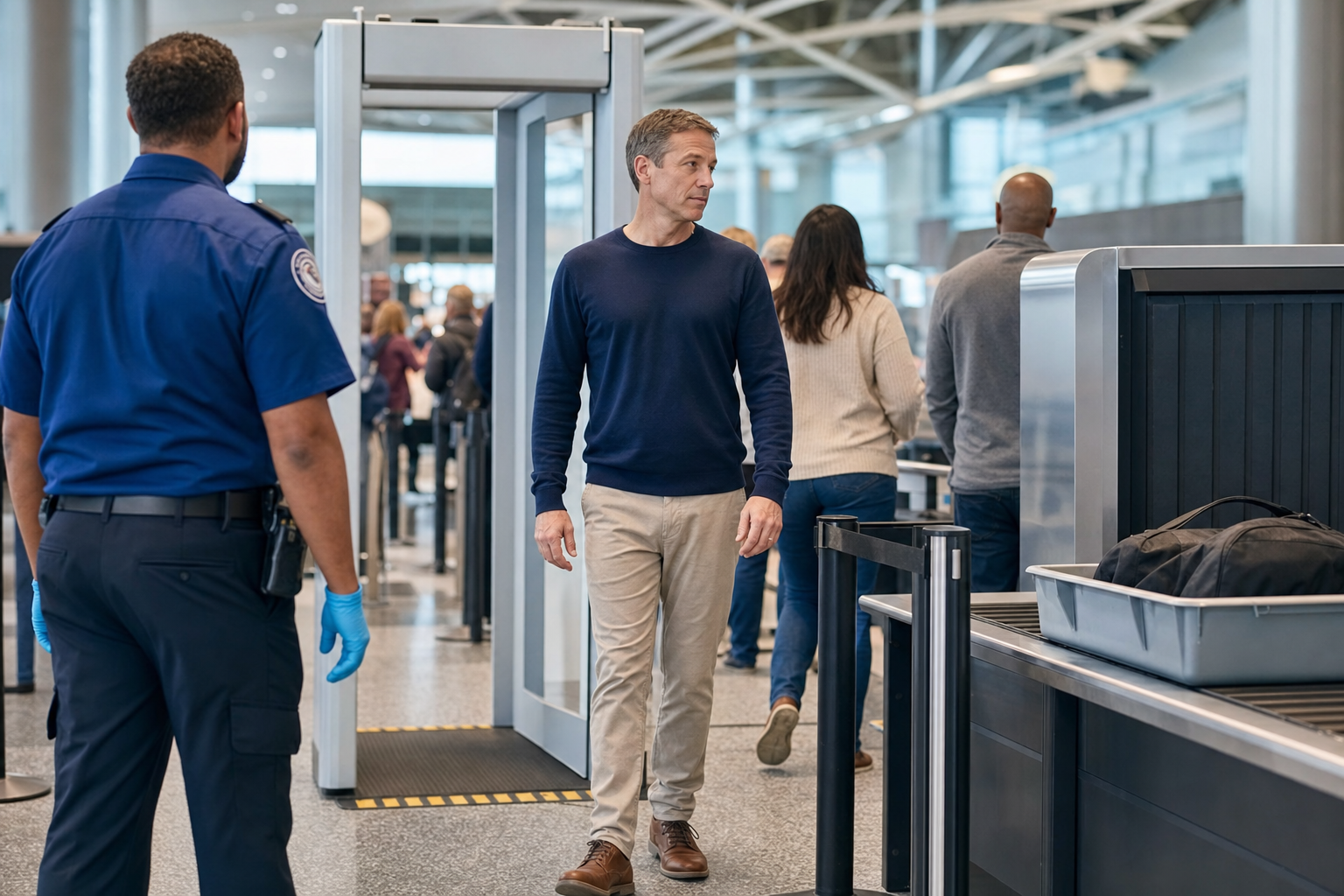
No. At U.S. Transportation Security Administration checkpoints, passengers can normally keep their shoes on in 2026. The Department of Homeland Security announced the nationwide change on July 8, 2025, ending routine shoe removal during standard screening. However, this is not an unconditional right to leave footwear on: a Transportation Security Administration officer may still ask you to remove your shoes if additional screening is needed. Follow the officer’s instructions at the checkpoint.
The policy applies at Transportation Security Administration checkpoints in U.S. airports, including when you are departing the United States on an international flight. It does not apply automatically at airports outside the United States. When you begin a journey abroad or transfer through another country, follow the local airport’s screening rules.
The shoes on policy applies at U.S. TSA checkpoints
The July 8, 2025 policy change means shoe removal is no longer a routine first step for passengers using regular Transportation Security Administration screening lanes. Previously, many standard-lane passengers had to place footwear in a bin for X-ray screening.
The change does not mean that footwear is no longer screened. The Transportation Security Administration continues to use layered security measures and may conduct extra checks when necessary. The practical difference is that most passengers start the process wearing their shoes.
Do not rely on an old travel checklist or a previous airport experience. Screening procedures can differ according to the equipment in a particular lane, and officers may give instructions that differ from general guidance. Signs at the checkpoint and directions from officers take priority.
When you may still be asked to remove your shoes
Keeping your shoes on is the normal procedure, but you may still need to remove them during additional screening. Do not argue that the general policy prevents an officer from checking your footwear.
- Your screening produces an alarm. If screening equipment identifies an area that needs to be resolved, an officer may inspect it further, conduct a pat-down or ask for your shoes to be screened separately.
- You receive additional screening. Further screening can involve a closer inspection of footwear even when there is no obvious issue visible to you.
- An officer gives a direct instruction. Officers may require an item to be removed or placed through the X-ray machine. Follow the instruction first, then ask politely if you need clarification.
- Your footwear contains significant metal. Steel-toe work boots, footwear with large buckles or other metal-heavy designs may set off screening equipment and require further checks.
You do not need to wear sandals or slip-on shoes simply because of the former routine shoe-removal rule. Easily removable footwear can still be practical, though, if your usual shoes contain substantial metal or often lead to extra screening.
What you may still need to remove at security
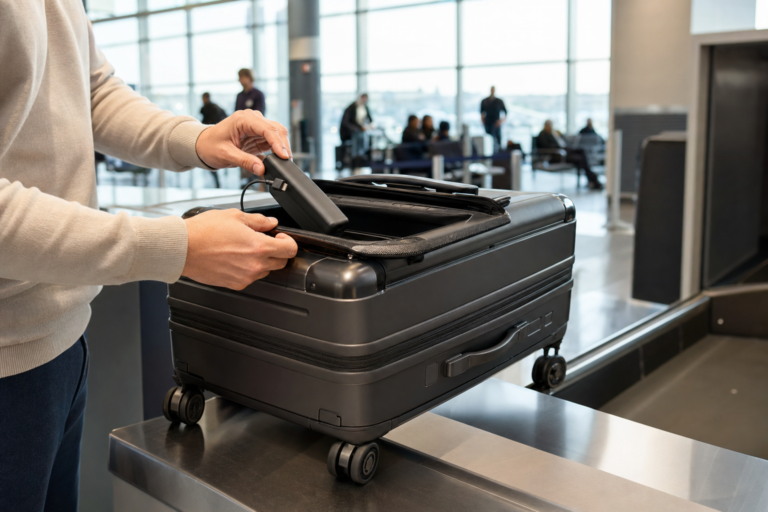
The shoes-on change did not remove the other preparation requirements at an airport checkpoint. What you take out of your bag depends on the lane, the screening equipment in use and the officer’s directions.
In a standard lane, be ready to remove or separate the following items when instructed:
- Items from your pockets, such as keys, coins, phones and wallets
- Belts, bulky jewellery, heavy outerwear or other items that can interfere with screening
- Laptops and other larger electronics
- Your bag of travel-size liquids, aerosols, gels, creams and pastes
- Foods, powders or tightly packed materials that can obstruct a clear bag image
- Medically necessary liquids, baby formula, breast milk and other exempt items that need separate screening
Some checkpoints use computed tomography scanners, which create more detailed images of carry-on bags. At those lanes, passengers may be told to leave electronics and compliant liquids inside their bags. Do not assume the procedure at one airport will be used at another. Read the lane signs and listen to the officer before unpacking.
The basic carry-on liquids rule remains in place. Most liquids, gels and aerosols must be in containers holding no more than 3.4 ounces or 100 millilitres. Those containers must fit in one quart-size bag. Medically necessary liquids, medications and certain items for infants and children may exceed that limit, but they should be declared to an officer and may need additional screening.
Adult passengers age 18 and over generally need acceptable identification to enter the checkpoint. Since May 7, 2025, a state-issued driver’s license or identification card must be REAL ID compliant unless you present another accepted form of identification, such as a passport. Travelers can review whether they can fly without a REAL ID in 2026 before leaving for the airport.
Why TSA PreCheck is still useful
Keeping shoes on was once one of the most visible benefits of Transportation Security Administration PreCheck, but it remains useful for other reasons. Eligible PreCheck passengers generally do not need to remove shoes, belts or light jackets, and can usually leave laptops and their bag of 3-1-1 liquids in carry-on luggage.
That reduced unpacking can make screening easier for frequent travelers and for people carrying electronics. PreCheck lanes may also be shorter, but faster screening is not guaranteed and lane availability varies by airport and operating hours.
PreCheck members are still subject to security screening and officer instructions. Membership does not guarantee that a traveler will avoid a pat-down, bag search, additional screening or a request to remove footwear.
How to approach the checkpoint in 2026
Use this checklist when you reach a U.S. airport security line:
- Keep your shoes on unless a sign or Transportation Security Administration officer says otherwise.
- Have acceptable identification ready and follow instructions at the document-checking station.
- Empty your pockets and place small valuables inside your carry-on rather than leaving them loose in a bin.
- Check the lane signs before removing laptops or liquids from your bag.
- Remove belts or outerwear when directed. The shoes-on policy does not mean every item you are wearing can stay on.
- Declare exempt liquids such as medication, baby formula and breast milk, and make them accessible for separate screening.
- Expect possible additional screening if footwear or another item produces an alarm.
- Check every bin before leaving so you do not forget your phone, identification or other belongings.
Older Transportation Security Administration pages and downloadable checklists can still appear in search results. Some were published before the July 8, 2025 policy change and may say that standard-lane passengers must remove their shoes. Check a page’s date before relying on it.
At the airport, the simplest approach is to arrive with your shoes on, prepare the rest of your belongings as instructed and follow the current directions from the officers at your checkpoint.
Sources
- Transportation Security Administration announcement on ending the shoes off travel policy
- Transportation Security Administration PreCheck information
- Transportation Security Administration travel tips and 3-1-1 liquids rule
- Transportation Security Administration acceptable identification at the checkpoint