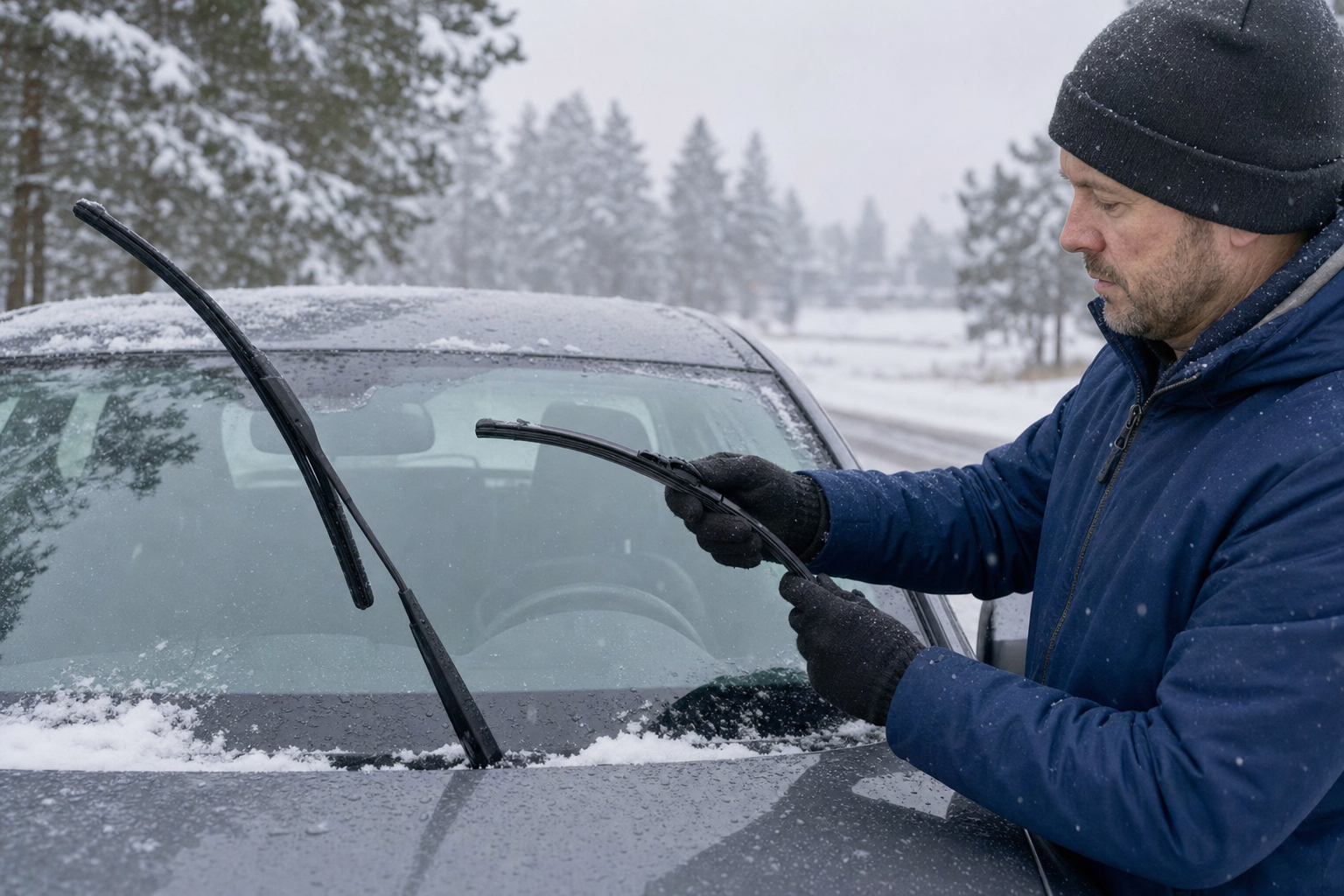
Choose dedicated winter wiper blades if you regularly drive through heavy snow, freezing rain, slush or repeated freeze and thaw conditions. For cold rain, occasional snow and light frost, a well-fitting beam blade is usually the better year-round choice because it has no exposed frame joints where ice can build up. In every climate, replacing worn blades matters more than choosing a package labelled for winter.
The National Highway Traffic Safety Administration recommends considering heavy-duty winter wipers where snow and ice are common. That is sensible advice when winter weather repeatedly stops ordinary blades from flexing or clearing the glass. It does not mean that every driver in a cold climate needs a separate seasonal set.
How conventional beam and winter wiper blades differ
Blade construction affects how well a wiper maintains contact with the windshield when ice and wet snow collect around it. Product names vary by manufacturer, but most replacement blades fall into the following groups.
| Blade design | How it is built | Best suited to | Main limitation |
|---|---|---|---|
| Conventional | A rubber wiping element held by an articulated metal or plastic frame | Mild climates and lower-cost replacements | Exposed joints can collect ice and slush |
| Winter | Often a protected frame design or a winter-specific beam design | Frequent snow, freezing rain and refreezing | May be bulkier or less useful outside severe winter conditions |
| Beam | A curved, frameless blade with continuous internal support | Year-round use, including many moderate winters | Usually costs more than a basic conventional blade |
Conventional blades use several pivot points to help distribute pressure across the windshield. They are common and inexpensive, but snow and frozen slush can obstruct those moving sections. If the frame cannot flex, parts of the wiping edge can lift from the glass and leave uncleared areas.
Traditional winter blades commonly cover the frame with a flexible boot, helping keep snow and ice away from the joints. Winter-specific products may also use rubber compounds intended for cold-weather service. Newer winter blades are not always booted: some use a beam structure designed to reduce snow and ice buildup.
Beam blades, sometimes called frameless blades, have no exposed external frame joints. Their curved design applies pressure along the windshield and gives ice fewer places to lodge. Many include a spoiler that helps the blade stay against the glass at speed. A beam blade is therefore a practical all-season option, not simply a compromise for winter.
Hybrid blades combine elements of conventional and beam designs, usually placing an aerodynamic outer shell over a supported frame. They can provide useful protection from the weather, but the label “hybrid” does not by itself establish how well a blade will resist ice. Check the manufacturer’s description and the correct vehicle fitment.
When dedicated winter blades are worth buying
Dedicated winter blades are most useful when frozen buildup is a recurring cause of poor wiping, not simply because the temperature is low. They are a sensible purchase when several of the following conditions apply:
- You drive through frequent heavy snow, mountain storms or prolonged winter precipitation.
- Road spray coats the blades with slush that freezes after the vehicle is parked.
- Your local temperatures often move above and below freezing.
- Your vehicle stays outdoors overnight or through winter storms.
- Your current conventional blades develop frozen joints or leave broad missed sections of glass.
- You may need to drive before roads have been fully cleared.
Drivers in snow-prone areas, including mountain communities and places with persistent lake-effect snow, are more likely to benefit. However, parking outdoors, commute timing and the roads you use can matter more than the region on a map.
A quality beam blade is often enough for a milder winter. Its lack of exposed joints addresses the principal winter weakness of a conventional frame blade. It can be especially suitable where winter means cold rain, occasional sleet and short-lived snow rather than persistent slush and refreezing. It also avoids changing and storing a separate set of blades.
Replace blades that streak, smear, skip, squeak, chatter, crack or fail to clear the windshield effectively. AAA notes that blades commonly need replacement every six to 12 months, although their life depends on heat, sunlight, dirt, road salt, use and where the vehicle is parked. A new, correctly fitted all-season blade is safer than an old winter blade with hardened or damaged rubber.
Consider year round use and winter visibility
Winter blades are not automatically the best option in every season. A traditional booted design can be bulkier than a low-profile beam blade, and wiping performance varies by vehicle and product. If a blade becomes noisy, streaks, skips or fails to follow the windshield contour, replace it rather than relying on its winter rating.
Summer heat and ultraviolet exposure also age rubber. If you use a separate winter set, inspect it before reinstalling it the following season. Follow the blade maker’s storage guidance and do not reuse blades with cracked rubber, a distorted frame or spine, or a damaged connector. Marking the driver and passenger blades can help when their lengths differ.
Wipers are only one part of winter visibility. Before winter weather arrives, check that the front and rear wipers and defrosters work. Fill the washer-fluid reservoir with winter-rated fluid that contains de-icer and is suitable for the temperatures you expect. Ordinary warm-weather fluid can freeze on the windshield or in the system.
Drivers reviewing their wider cold-weather setup may also want to compare all weather tires and winter tires or consider the differences between studded and studless winter tires.
How to buy and use wiper blades safely
Do not choose replacement wipers by length alone. The driver-side, passenger-side and rear blades may have different lengths and attachment systems. Consult the owner’s manual first, especially if the vehicle has concealed wipers that must be moved to a service position before replacement.
- Check the owner’s manual. Confirm any specified blade sizes, replacement instructions and service-mode procedure.
- Use a fitment guide. Enter the exact model year, make, model and body style, where requested, in a manufacturer’s or retailer’s current lookup tool. Check the front and rear positions separately.
- Confirm the connector. Compare the attachment on the new blade with the existing wiper arm and make sure any required adapter is included.
- Replace one blade at a time. Keep the other blade in place as a reference for length and attachment orientation.
- Test it on a wet windshield. Lower the arm gently, use suitable washer fluid and check that the blade is secure, clears the trim and wipes the glass evenly.
Put a folded towel on the windshield while working. A bare, spring-loaded wiper arm can snap back and crack or chip the glass if it is released without a blade attached.
Most importantly, wiper blades are not ice scrapers. Do not run them when they are frozen to the windshield or use them to force through bonded frost and heavy snow. That can tear the wiping edge, damage the blade or overload the wiper system.
Start the defroster, brush loose snow from the vehicle and use a proper scraper to clear the windshield. Free the blades from the glass and remove ice around their edges before turning them on. Keep a snow brush and ice scraper in the vehicle; the National Highway Traffic Safety Administration includes both on its recommended winter supplies list.
Choose winter-rated or protected winter blades when ice buildup repeatedly defeats your current blades. Otherwise, buy well-fitting beam blades, maintain winter washer fluid and replace the blades promptly when visibility deteriorates.