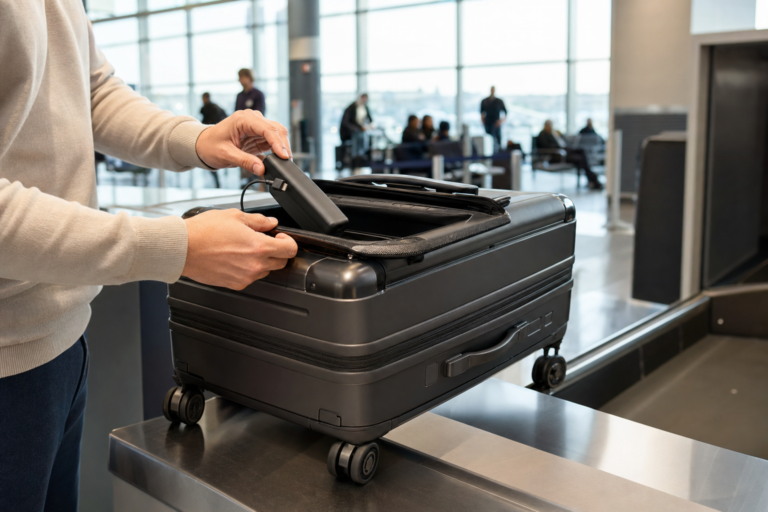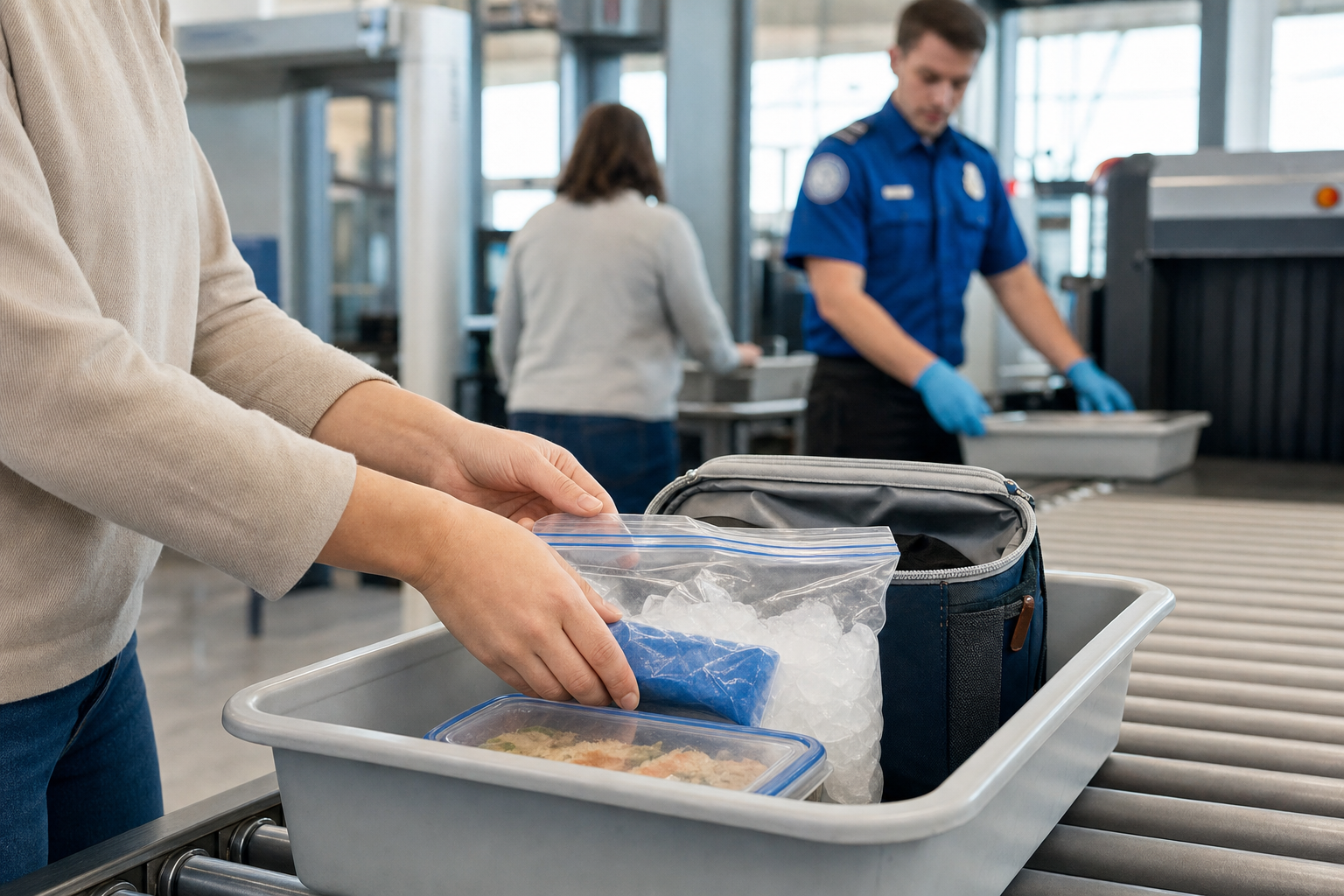
Yes, you can bring ice packs through Transportation Security Administration (TSA) checkpoints in the United States. For ordinary food, reusable freezer packs, gel packs and loose ice should be completely frozen when screened. If they are partly melted, slushy or surrounded by meltwater, they may be restricted as liquids. Important exceptions apply to medically necessary ice packs and cooling accessories for breast milk, formula, toddler drinks, and baby or toddler food. Those qualifying packs do not have to remain frozen and may be accepted even when fully melted, subject to separate screening.
These rules apply at TSA checkpoints in the United States. Your airline may impose separate carry-on size, weight and baggage limits. International aviation-security rules and food-import restrictions can also differ, so check the relevant requirements when traveling outside the United States.
Quick guide to TSA ice pack rules
| Item and purpose | Condition at screening | Likely carry-on result |
|---|---|---|
| Reusable freezer or gel pack for ordinary food | Completely frozen | Generally allowed |
| Reusable pack for ordinary food | Partly melted, slushy or liquid | Must satisfy the 3-1-1 liquids rule; stricter food-cooler guidance may apply |
| Loose ice for ordinary use | Solid, without meltwater | Generally allowed |
| Ice or ice packs surrounding meat, seafood or frozen food | Completely frozen, with no liquid at the bottom | Generally allowed |
| Ice or ice packs surrounding meat, seafood or frozen food | Partly melted, with liquid at the bottom | TSA states that they will not be permitted |
| Medically necessary gel ice pack | Frozen, slushy or melted | Allowed in reasonable quantities after declaration and screening |
| Pack needed to cool breast milk, formula, toddler drinks, or baby or toddler food | Any physical state, including melted | Allowed under special screening provisions |
| Ordinary reusable pack in checked baggage | Frozen or thawed | Generally allowed |
| Force-activated instant cold pack containing ammonium nitrate | For medical or first-aid use | May be allowed within hazardous-material limits |
The TSA officer at the checkpoint makes the final decision. An item may require additional inspection or be refused if it triggers an alarm, cannot be identified, appears to have been altered or presents another security concern.
Ordinary food packs should be frozen solid
For an ordinary lunch, leftovers, frozen food or other personal food, the safest approach is to present every reusable freezer pack or gel pack completely frozen. A hard plastic cooling block and a flexible gel pouch are both treated as frozen liquid or gel products. The outside material does not change the rule.
Under TSA’s general freezer-pack and gel-pack entries, a pack that becomes partly melted or slushy must meet the 3-1-1 liquids requirements. Each container can have a capacity of no more than 3.4 ounces or 100 milliliters, and it must fit with your other restricted liquids in one clear, quart-sized, resealable bag. Most reusable cooling packs are larger than that limit, so a thawing pack will commonly be rejected.
TSA’s specific guidance for meat, seafood and other frozen food is stricter in its wording. If food is packed in a cooler with ice or ice packs, the cooling material must be completely frozen. TSA says partially melted ice or packs will not be permitted when liquid is present at the bottom of the container. Do not assume that pouring off the water will automatically make a slushy pack acceptable.
Loose ice and frozen water are generally allowed while completely solid. If ordinary loose ice has begun to melt, remove the water before reaching screening, but be prepared for the remaining ice and its container to receive additional inspection. For the most predictable result, start with deeply frozen ice or use checked baggage instead.
The 3-1-1 restriction does not apply to ordinary liquids in checked baggage, although airline weight limits and other safety rules still apply. Seal thawed packs in leakproof bags and protect nearby clothing and electronics. If you want the cooler in the cabin, make sure it complies with the airline’s baggage allowance. The guide to bringing a cooler on a plane as carry-on luggage explains the additional considerations.
Medical and child-feeding packs can be melted
Medically necessary gel ice packs are allowed in reasonable quantities regardless of whether they are frozen, slushy or completely melted. This exception can cover a pack needed to keep medication cold or one required for another genuine medical purpose. Tell the TSA officer about it at the beginning of screening and remove it from your bag if instructed.
Keep medication, medical supplies and cooling packs together in an organized part of your carry-on. Medication labels are recommended but not required by TSA. Identifiable packaging can nevertheless make the purpose of the pack easier to explain. Travelers carrying pills may also find the guide to taking medication through TSA in a pill organizer helpful.
Cooling accessories needed for breast milk, formula, toddler drinks, and baby or toddler food also receive special treatment. TSA allows ice packs, freezer packs, gel packs and similar accessories required to cool these items, regardless of whether breast milk is present. A child or infant does not have to be traveling with the person carrying breast milk, formula or related supplies.
Freezing is not a condition of this child-feeding exception. A qualifying cooling accessory can be frozen, partly frozen, slushy or melted. Partly frozen and slushy accessories are subject to the same special screening process as the child-feeding liquids. A fully melted pack may likewise require inspection, but it should not be treated as an ordinary oversized liquid when it is genuinely being carried as a necessary cooling accessory for the covered items.
Declare breast milk, formula, toddler drinks, baby food and their cooling accessories at the beginning of screening. Amounts greater than 3.4 ounces or 100 milliliters are allowed and do not need to fit in the quart-sized liquids bag. Remove them from your carry-on for separate screening when requested.
Officers may test the outside of containers or ask for a container to be opened when feasible. TSA recommends clear or translucent bottles because screening equipment may have difficulty examining liquids in opaque bags or pouches. If you do not want breast milk, formula or child food opened or exposed to X-rays, tell the officer before screening. Alternative procedures may be available, but you or the traveling guardian should expect additional screening.
Security permission and safe food storage are separate matters. The Centers for Disease Control and Prevention advises that freshly expressed breast milk can be transported in an insulated cooler with frozen ice packs for up to 24 hours. A pack being allowed through security does not establish that the milk has remained cold enough for safe storage.
How to pack ice packs for a flight
A few practical steps can reduce thawing and make checkpoint inspection easier:
- Freeze ordinary reusable packs until they are hard throughout, not merely cold.
- Keep the cooler in a freezer or refrigerator until shortly before leaving.
- Use an insulated container and avoid opening it unnecessarily.
- Do not leave the cooler in a warm vehicle on the way to the airport.
- Check for liquid at the bottom before joining the screening line.
- Place medical and child-feeding items near the top of the carry-on.
- Declare exempt liquids and cooling accessories before screening begins.
- Allow extra time for inspection, testing or alternative screening.
- Use leakproof secondary bags around food, medicine and cooling packs.
- Confirm the cooler’s dimensions with the airline before departure.
Instant cold packs need additional attention because some contain ammonium nitrate, which is regulated as a hazardous material. The Federal Aviation Administration allows force-activated instant packs containing ammonium nitrate in carry-on or checked baggage when carried for medical or first-aid purposes, such as treating a sporting injury.
Each qualifying instant pack can have a capacity of no more than 0.5 kilograms or 500 milliliters. The combined allowance for restricted medicinal and toiletry articles is two kilograms or two liters per person. In carry-on baggage, a nonfrozen liquid or gel pack is also subject to the 100-milliliter checkpoint limit unless a valid medical exception applies. Keep instant packs in their original packaging so officers can identify the ingredients and purpose.
If an ordinary oversized pack becomes slushy before screening, the practical options are to move it to checked baggage, return it to a vehicle or surrender it. Do not claim a medical or child-feeding exception for a pack that is only cooling an ordinary meal. The exceptions depend on the pack’s genuine purpose, not simply on whether losing it would be inconvenient.